



What's Happening?
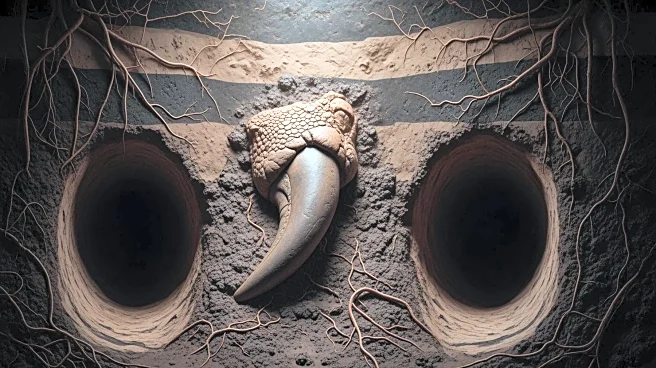
Scientists have uncovered massive underground tunnels in southern Brazil and northern Argentina, believed to have been created by giant ground sloths, known as Megatherium. These tunnels, some stretching over 600 yards, are carved into solid rock and exhibit
a distinct design that suggests they were not formed by humans or geological processes. The tunnels' size and complexity point to large animals as their creators, with claw marks on the walls matching those of the Megatherium. These sloths, which stood 12 feet tall and weighed up to four tons, likely used their massive claws to dig these tunnels for shelter or protection from predators.
Why It's Important?
The discovery of these tunnels provides significant insights into the behavior and capabilities of prehistoric megafauna. Understanding the role of giant sloths in shaping the landscape offers a new perspective on the ecological dynamics of the Ice Age. This finding also highlights the potential for large animals to impact their environment in ways previously unrecognized. The tunnels serve as a testament to the engineering prowess of these extinct creatures, challenging current assumptions about prehistoric life and prompting further research into the interactions between humans and megafauna during the Ice Age.
What's Next?
Further exploration and mapping of these tunnels are expected to continue, with scientists aiming to uncover more about the behavior and ecology of the Megatherium. Researchers may also investigate other regions for similar structures, potentially revealing a broader network of tunnels across South America. This discovery could lead to new studies on the impact of megafauna on ancient ecosystems and their interactions with early humans. Additionally, the findings may inspire conservation efforts to protect existing habitats that could harbor similar undiscovered structures.