





What's Happening?
The Hawaiʻi State Department of Education (HIDOE) is requesting additional funding to address approximately $100 million in damages sustained from five major storms that have impacted the state since March. A report to the Board of Education indicated
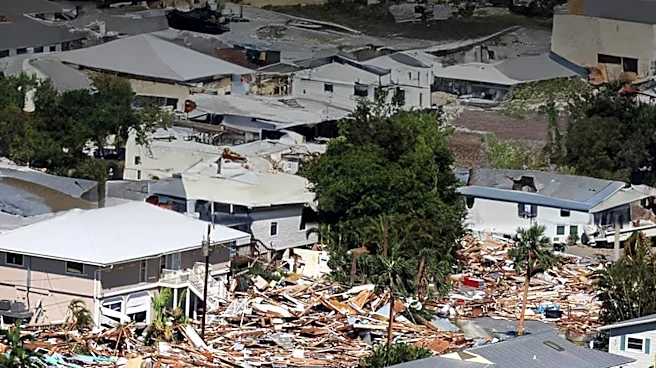
that this year's storms have caused an estimated $198 million in damage and resulted in over 400 work orders. The department is still assessing the full extent of damage from recent Hurricanes Lowell and Nolo, suggesting that the total cost estimates are likely to increase. While HIDOE has received $50 million for repairs, a significant funding gap remains. Deputy Superintendent Tammi Oyadomari-Chun stated that efforts are underway with the governor and the Legislature to secure the necessary additional funds, particularly to address over $100 million in damage from the Kona low storms. The Kona low storms in March affected 54 schools, generating 224 work orders with preliminary costs of $162 million. Hurricane Lala in mid-August led to repairs at 38 schools, with 153 work orders and initial estimates of $12 million. Hurricane Lowell in early September impacted 17 schools, resulting in 32 work orders and preliminary costs of $24 million. Hurricane Nolo in late September caused no significant structural damage, but assessments are ongoing.
Why It's Important?
The substantial financial burden on HIDOE highlights the increasing vulnerability of Hawaii's public school infrastructure to severe weather events, which could have long-term implications for educational continuity and student well-being. The need for over $100 million in additional funding underscores a significant fiscal challenge for the state, potentially diverting resources from other critical public services or necessitating tax increases. Delays in securing these funds could prolong repair timelines, leading to extended school closures and disruptions to learning, particularly in communities already affected by the storms. The repeated closures, with some schools shut for up to 13 days, demonstrate the immediate impact on students' access to education and the operational challenges faced by school administrators. This situation also brings to light the broader issue of climate resilience in public infrastructure, prompting discussions on preventative measures and sustainable building practices to mitigate future storm damage and protect educational environments.
What's Next?
HIDOE will continue to collaborate with the governor and the Legislature to secure the additional funding required for the remaining storm damage repairs. This process will likely involve detailed presentations of damage assessments and cost projections to state lawmakers, potentially leading to legislative proposals for emergency appropriations or inclusion in future budget cycles. The department will also proceed with repair and maintenance work using the $50 million already received, prioritizing the most critical damages to restore full functionality to affected schools. Further assessments of damage from Hurricanes Lowell and Nolo will be finalized, which may lead to revised total cost estimates and subsequent adjustments in funding requests. Stakeholders, including parents, teachers, and community groups, will likely monitor the progress of funding allocation and repair efforts, advocating for timely and comprehensive solutions to ensure the safety and operational readiness of Hawaii's public schools.
Beyond the Headlines
This situation extends beyond immediate repair costs, signaling a broader need for Hawaii to invest in climate-resilient infrastructure for its public education system. The recurring nature of severe storms suggests that current building standards and maintenance protocols may be insufficient to withstand future climate impacts. This could prompt a re-evaluation of state-wide infrastructure planning, encouraging the adoption of more robust, sustainable, and storm-resistant construction materials and designs for schools. Furthermore, the financial strain on HIDOE could spark a debate about federal assistance for states facing repeated climate-related disasters, potentially influencing national disaster relief policies. The disruption to education also highlights the importance of developing comprehensive disaster preparedness plans for schools, including remote learning capabilities and alternative educational facilities, to minimize the impact of future closures on students' academic progress and mental well-being.