
What's Happening?
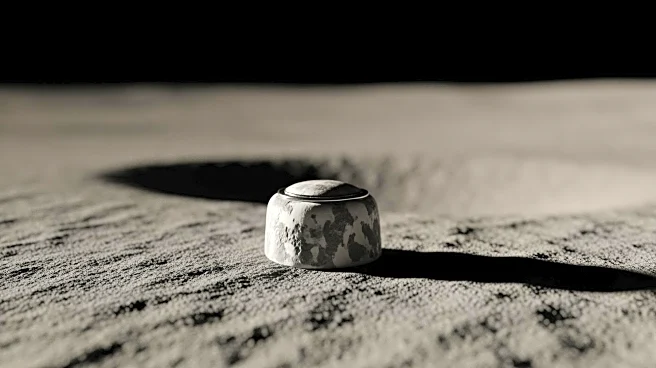
In 1972, Apollo 16 astronaut Charles Duke left a personal memento on the Moon—a photograph of his family. This gesture, intended to inspire his children, remains a poignant symbol of the human aspect of space
exploration. The mission, which faced technical challenges, saw Duke and his fellow astronauts engage in informal 'Moon Olympics' despite the risks. Duke's family photo, along with other personal items, was left on the lunar surface as a tribute to his family and career. This act underscores the personal sacrifices and emotional connections involved in space missions.
Why It's Important?
Charles Duke's decision to leave a family photo on the Moon highlights the deeply personal nature of space exploration, often overshadowed by its scientific and technical achievements. This gesture serves as a reminder of the human stories behind space missions, emphasizing the emotional and familial aspects that astronauts carry with them. It also reflects the broader cultural impact of space exploration, inspiring future generations to dream of the stars. Duke's memento is a testament to the personal connections that persist even in the vastness of space, offering a unique perspective on the human experience.
Beyond the Headlines
The presence of personal items on the Moon raises questions about the cultural and ethical dimensions of space exploration. As humanity continues to explore and potentially inhabit other celestial bodies, the preservation of such artifacts becomes a consideration for future missions. These items serve as historical markers, capturing moments of human achievement and personal significance. The story of Duke's memento also invites reflection on the legacy of space exploration and the narratives that will shape our understanding of humanity's place in the universe.