


What's Happening?
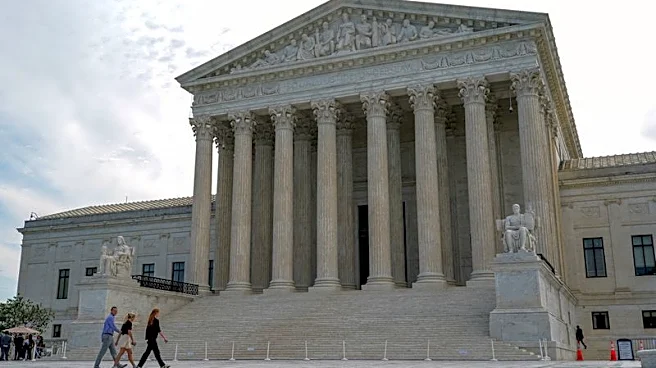
The dispute over Missouri's congressional map remains unresolved, even after two trips to the U.S. Supreme Court. A federal appeals court in St. Louis has ruled that the Republican-drawn map used in the August primary must be utilized for the upcoming
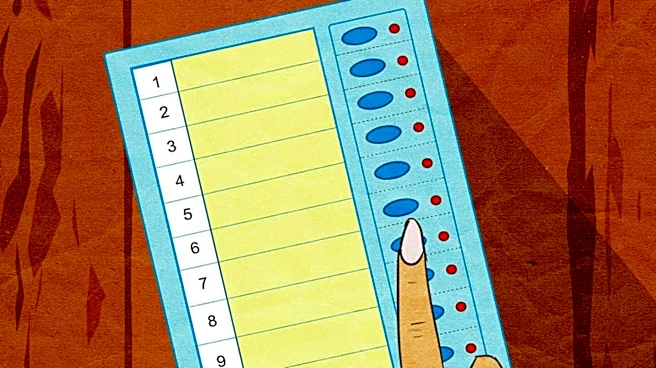
November election. This decision has created significant uncertainty for local election officials, who are now issuing voter warning notices. Absentee voting is already underway, and military and overseas ballots have been cast, leading to potential complications if the U.S. Supreme Court intervenes for a third time before a Monday 5 p.m. deadline. Election leaders are in uncharted territory, with the possibility of having to redo ballots if the map lines change.
Why It's Important?
The ongoing legal battle over Missouri's congressional map has profound implications for the integrity and administration of the upcoming elections. The uncertainty surrounding district boundaries can disenfranchise voters, create confusion, and undermine public confidence in the electoral process. Local election officials face an unprecedented challenge, potentially having to re-issue ballots and re-educate voters, which could lead to logistical nightmares and increased costs. Furthermore, the situation highlights the deep partisan divisions in redistricting, where political considerations often overshadow fair representation. The outcome could significantly impact the balance of power in the U.S. House of Representatives, depending on how the final map shapes competitive districts and voter turnout.
What's Next?
The immediate next step is the looming Monday 5 p.m. deadline for the U.S. Supreme Court to potentially intervene in Missouri's congressional map dispute. If the Supreme Court does not act, the federal appeals court's ruling will stand, and the August primary map will be used for the November election. However, if the Supreme Court does intervene, local election officials will face the complex task of redoing ballots, which could cause further delays and confusion, especially with absentee voting already in progress. Beyond the election, there is a possibility of continued legal challenges, with some suggesting that the Secretary of State might decline to certify results or that the U.S. House could refuse to seat representatives if irregularities are claimed. Voters will also consider Proposition A in November, which could impact future redistricting battles.
Beyond the Headlines
The Missouri congressional map saga exposes deeper issues within the American democratic system, particularly concerning gerrymandering and the politicization of electoral processes. The repeated legal challenges and the unprecedented advice to voters to delay absentee voting underscore a crisis of confidence in the fairness and stability of elections. This situation could set a precedent for future redistricting battles, potentially encouraging more aggressive partisan map-drawing and prolonged legal disputes. It also highlights the tension between judicial oversight and legislative autonomy in defining electoral districts. The long-term consequence could be a further erosion of trust in democratic institutions and a perception that election outcomes are more a result of political maneuvering than the will of the people.