




What's Happening?
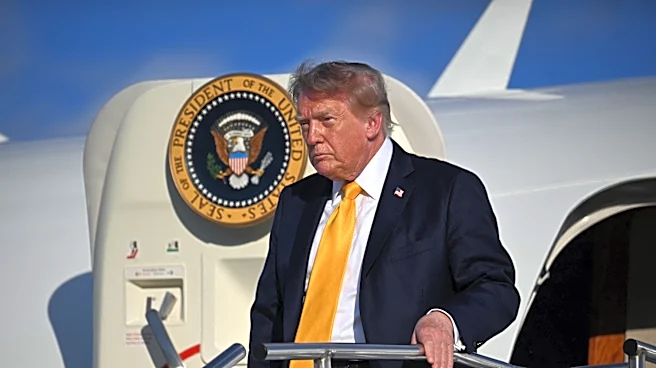
President Trump's administration has announced a deal that is expected to significantly boost the 'Western' crude oil supply, primarily through increased involvement in Venezuela's oil industry. The White House released a statement on August 31, detailing
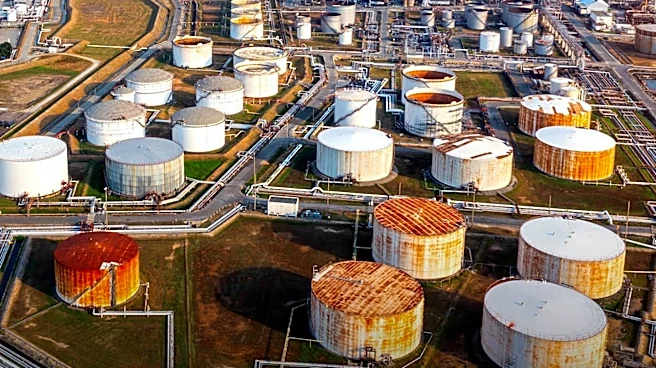
that the U.S. now possesses "powerful governance rights, economic ownership, and guaranteed low-cost off-take from a new private Venezuelan oil champion." This new entity, North American Blue Energy Partners (NABEP), will hold 17 oil concessions in Venezuela, equating to 65 billion barrels of reserves, making it the second-largest private oil company by reserves globally. President Trump has hailed this as the 'biggest oil deal in history.' Furthermore, the U.S. Department of War will receive a 35% equity stake in NABEP's corporate parent, and the U.S. Department of State will have the right to purchase 20% of production at cost, with an option to buy the remaining 80% in 'emergency situations.' This policy is stated to be consistent with the Monroe Doctrine.
Why It's Important?
This deal has profound implications for global energy markets and U.S. energy security. By securing significant access to Venezuelan oil reserves, the U.S. aims to diversify its crude supply and reduce reliance on Middle Eastern sources, especially amid ongoing hostilities between Iran and the U.S. and restricted supply from the region. This move could contribute to stabilizing oil prices, which have seen a 20% increase over the past month, with Brent crude trading at approximately US$97 a barrel. The projected capital expenditure to bring this oil to market is US$100 billion, indicating a massive investment that could stimulate economic activity and create jobs. The involvement of the U.S. Department of War and Department of State also underscores the strategic national security interests tied to this energy initiative, reinforcing the Monroe Doctrine's principle of U.S. influence in the Western Hemisphere. This deal, coupled with Chevron's increased investment in Venezuela, signals a significant shift in the global oil industry's 'center of gravity' towards the Americas.
What's Next?
The immediate next steps will involve the operationalization of NABEP's oil concessions and the commencement of the projected US$100 billion capital expenditure to bring Venezuelan oil to market. Research firm Breakwave Advisors anticipates a modest initial uplift of about 500,000 barrels a day in Venezuelan production as early as 2027, though the pace of further increases will depend on the scale of investment. The U.S. Department of State's right to purchase oil at cost and its reserve power for emergency situations will likely be closely monitored for their impact on market dynamics and U.S. strategic reserves. The deal's long-term success will depend on political stability in Venezuela, the effective management of the concessions, and the ability to attract and deploy the necessary capital and technology. The market will also be watching for potential reactions from other oil-producing nations and how this increased Western Hemisphere supply affects global oil prices and trade relations.
Beyond the Headlines
President Trump's 'biggest oil deal in history' in Venezuela carries significant geopolitical and ethical considerations beyond its economic impact. The invocation of the Monroe Doctrine signals a reassertion of U.S. influence in Latin America, potentially raising concerns about sovereignty and interventionism among regional actors. The involvement of the U.S. Department of War and Department of State in a commercial oil venture blurs the lines between economic policy and national security, suggesting a more integrated approach to resource acquisition. Furthermore, the deal's success hinges on the political and economic stability of Venezuela, a nation that has experienced considerable turmoil. The long-term implications could include a reshaping of energy alliances, a potential reduction in the geopolitical leverage of traditional Middle Eastern oil producers, and a renewed focus on resource diplomacy in the Western Hemisphere. This move could also spark debates about the environmental impact of increased crude production and the U.S.'s commitment to renewable energy sources.