







What's Happening?
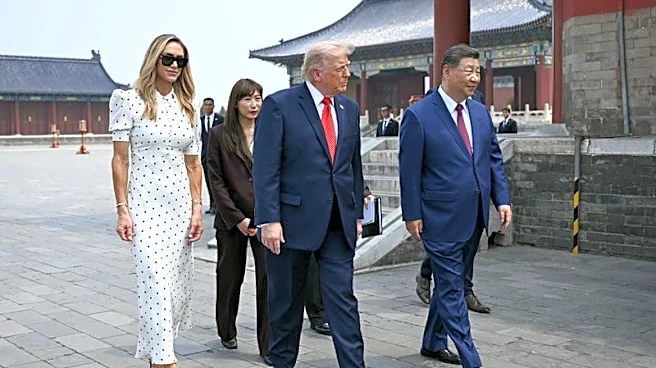
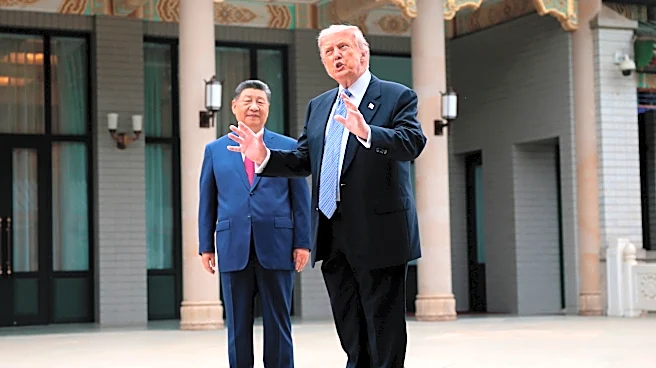
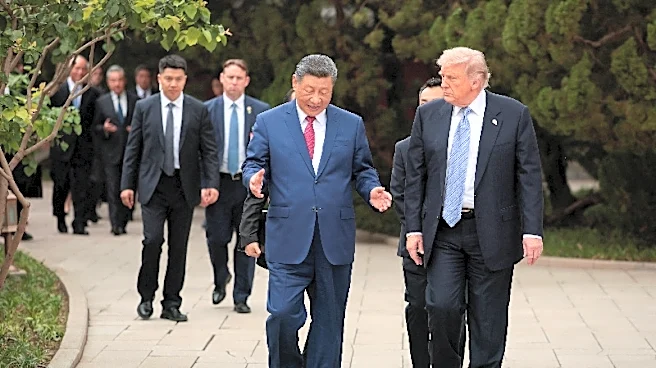
During a recent meeting in Beijing, Chinese President Xi Jinping reportedly discussed the concept of the 'Thucydides trap' with US President Donald Trump. This term, popularized by political scientist Graham Allison, describes the potential for conflict
between a rising power and an established superpower. The historical reference comes from the Peloponnesian War between Athens and Sparta, where the rise of Athenian power led to inevitable conflict with Sparta. President Xi's mention of this concept highlights concerns about the growing tensions between the US and China, as the US perceives China's rise as a potential threat to its global dominance.
Why It's Important?
The discussion of the 'Thucydides trap' is significant as it underscores the delicate balance of power between the US and China. The historical analogy suggests that mismanagement of this power shift could lead to conflict, which would have profound implications for global stability and economic relations. The US, as the current superpower, faces the challenge of addressing China's rise without resorting to military conflict. This situation affects international trade, security alliances, and diplomatic relations, with potential consequences for global markets and geopolitical stability.
What's Next?
The conversation between President Xi and President Trump suggests a need for strategic dialogue and cooperation to avoid the pitfalls of the 'Thucydides trap.' Both nations may need to explore diplomatic channels and mutual agreements to manage their relationship peacefully. Future discussions could focus on trade agreements, military de-escalation, and collaborative efforts in global governance. The outcome of these efforts will be crucial in determining whether the US and China can coexist as major powers without resorting to conflict.
Beyond the Headlines
The concept of the 'Thucydides trap' also raises questions about the role of historical narratives in shaping modern policy decisions. It challenges policymakers to consider the lessons of history while navigating contemporary geopolitical challenges. Additionally, it highlights the importance of understanding cultural and historical contexts in international relations, as these factors can influence perceptions and decisions at the highest levels of government.