

What's Happening?
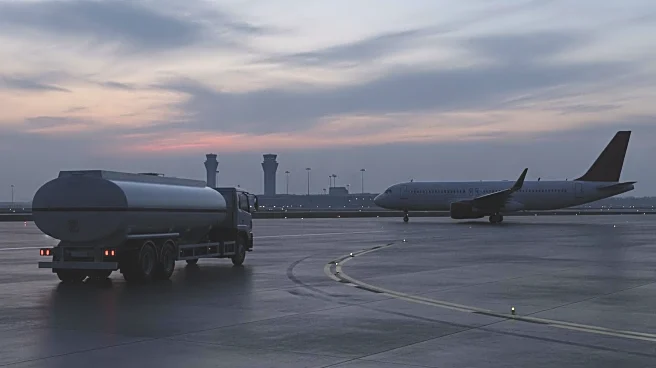
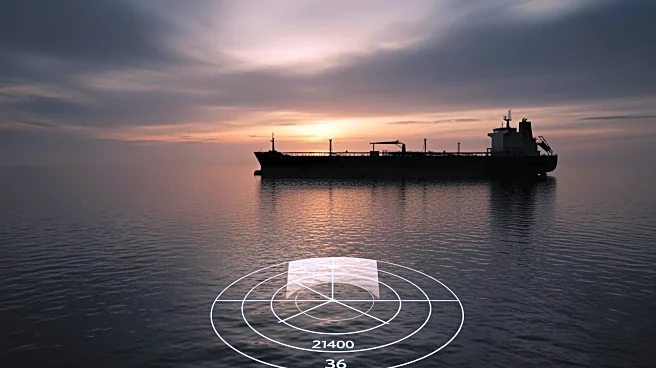
The US Coast Guard is actively pursuing an oil tanker in international waters near Venezuela, marking the third such operation in less than a week. This action follows President Trump's recent announcement of a 'blockade' on all oil tankers under sanctions
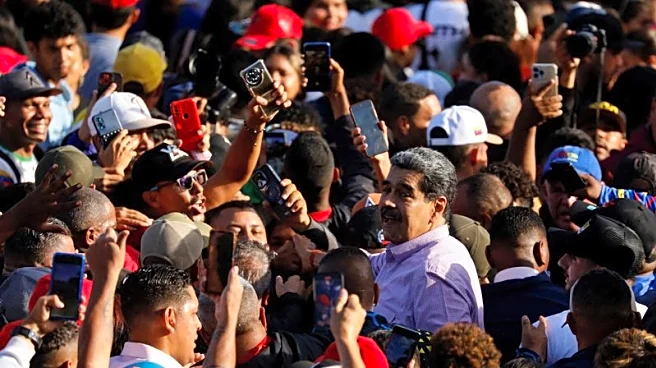
entering and leaving Venezuela. The targeted tanker is reportedly involved in black market oil activities, supplying oil to sanctioned countries. The US military has increased its presence in the region, conducting over two dozen military strikes on vessels in the Pacific Ocean and Caribbean Sea. These operations are part of a broader pressure campaign against Venezuelan President Nicolas Maduro. The White House has not commented on the latest operation, but US Secretary of Homeland Security Kristi Noem and National Economic Council Director Kevin Hassett have indicated that the seized tankers were operating illegally.
Why It's Important?
The US military's actions against oil tankers near Venezuela highlight the ongoing geopolitical tensions between the US and Venezuela. The operations are part of a strategy to curb Venezuela's oil exports, which are crucial to its economy, and to pressure President Maduro's government. The seizures could impact global oil markets, potentially leading to higher oil prices due to increased geopolitical risks. However, US officials have downplayed the impact on domestic oil prices, suggesting that the seized tankers were minor players in the market. The situation underscores the complex interplay between international sanctions, energy markets, and geopolitical strategies.
What's Next?
The continued US military operations in the region may lead to further diplomatic tensions between the US and Venezuela, as well as other countries involved in the black market oil trade. The international community will be watching closely to see how these actions affect global oil prices and geopolitical alliances. Additionally, there may be increased scrutiny on the effectiveness and legality of the US's blockade strategy. The situation could also influence US domestic policy discussions on energy independence and foreign policy.