



What's Happening?
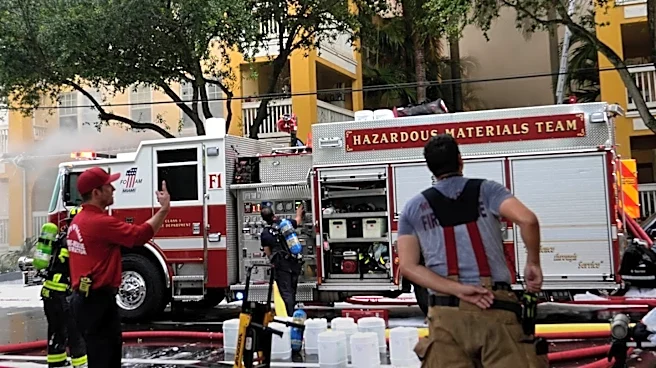
A 20-unit apartment building on Randolph Avenue in St. Paul was destroyed by a fire that broke out on a Monday morning. The intensity of the fire rendered the building unsafe, leading to its demolition the following Tuesday. Residents were unable to retrieve
their belongings before the demolition, with many watching as their homes and possessions were razed. Paige Mackedanz, who had moved into her apartment five months prior, and Charlie Cullington, a resident since 2020, were among those displaced. Cullington, who did not have renter's insurance, lost most of his possessions. Maddy Meyers, another resident, described smelling something electrical before leaving her apartment, not realizing it would be the last time she would step inside. The St. Paul Fire Department's investigation into the cause of the fire has been hampered as they could not re-enter the building.
Why It's Important?
The destruction of the apartment building highlights the immediate and devastating impact of such events on individuals and communities. The displacement of dozens of residents underscores the critical need for emergency housing and support services. For those without renter's insurance, like Charlie Cullington, the financial burden of losing all possessions is immense, emphasizing the importance of such coverage. The inability to retrieve sentimental items, as expressed by Maddy Meyers, reveals the profound emotional toll beyond material loss. This incident also brings to light the challenges faced by fire departments in investigating severe fires when structural integrity is compromised, potentially leaving the cause undetermined and preventing full understanding for future prevention.
What's Next?
Displaced residents are now facing the daunting task of finding new housing and rebuilding their lives. Fundraisers have been set up by family and friends for some tenants, including Cullington and Meyers, to help cover immediate needs and long-term expenses. St. Catherine University has offered a dorm room to student Katie Rivas Sanchez, who also lost her home. The St. Paul Fire Department's investigation into the fire's cause remains incomplete due to the building's unsafe condition, meaning residents may not receive a definitive answer regarding what caused the destruction. The community will likely continue to rally support for those affected, while the city may review its emergency response and support mechanisms for displaced residents.
Beyond the Headlines
This event brings to the forefront the often-overlooked issue of preparedness for catastrophic events, particularly for renters. The stories of residents like Charlie Cullington, who intended to get renter's insurance but delayed, serve as a stark reminder of the vulnerability many face. The emotional impact of losing not just a home but also irreplaceable sentimental items, as articulated by Maddy Meyers, points to the deeper psychological toll of such disasters. The community's spontaneous efforts to support the displaced, including the formation of a group chat among tenants, illustrate the resilience and solidarity that can emerge in the face of tragedy, highlighting the vital role of social networks in recovery.