



What's Happening?
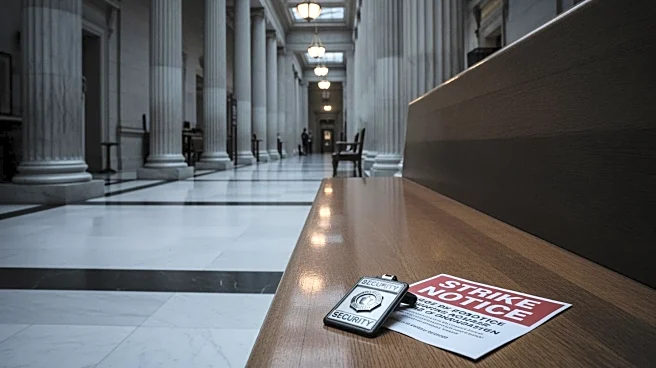
Employees at the Louvre Museum have voted to extend their strike, which has disrupted operations at the world-renowned museum. Despite the strike, the museum partially reopened to allow visitors access to a limited 'masterpiece route' featuring iconic
works such as Leonardo da Vinci's 'Mona Lisa' and the Venus de Milo. The strike is a response to issues including chronic under-staffing, building deterioration, and recent management decisions, all exacerbated by a recent heist of crown jewels that highlighted significant security lapses. The decision to continue the strike was made during a general assembly, following a unanimous vote earlier in the week. The museum was closed on Tuesday for its regular day off. In response to the strike, Culture Ministry officials have proposed measures such as canceling a planned $6.7 million funding cut for 2026, opening new recruitment for gallery guards and visitor services, and increasing staff compensation. However, union officials have deemed these measures insufficient.
Why It's Important?
The ongoing strike at the Louvre Museum underscores significant challenges in managing one of the world's most visited cultural institutions. The strike highlights broader issues of under-staffing and security vulnerabilities that could impact the museum's reputation and operational efficiency. The recent heist has intensified scrutiny on the museum's management and security protocols, raising questions about the adequacy of current measures to protect valuable artifacts. The situation also reflects broader tensions in the cultural sector, where funding cuts and staffing shortages are common. The outcome of this strike could influence future labor negotiations and funding decisions in the cultural sector, potentially affecting other museums and cultural institutions facing similar challenges.
What's Next?
Louvre President Laurence des Cars is scheduled to appear before the Senate's culture committee to address the security failures at the museum. This appearance is part of a broader investigation into the museum's security protocols following the heist. The Culture Ministry has announced emergency anti-intrusion measures and appointed Philippe Jost, known for overseeing the Notre Dame restoration, to help reorganize the museum. These steps indicate a commitment to addressing the security concerns, but the effectiveness of these measures remains to be seen. The ongoing strike and its resolution will likely influence future management decisions and could lead to significant changes in how the museum operates and secures its collections.