
What's Happening?
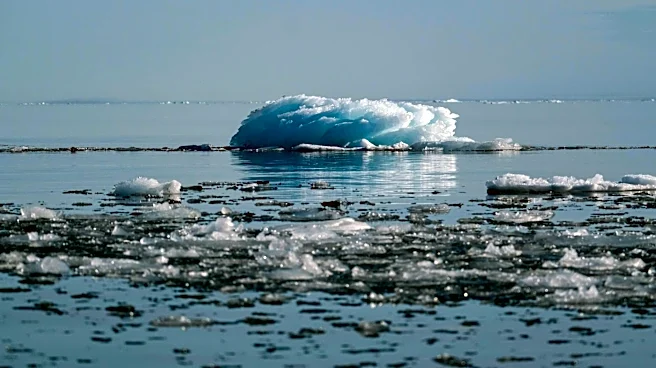
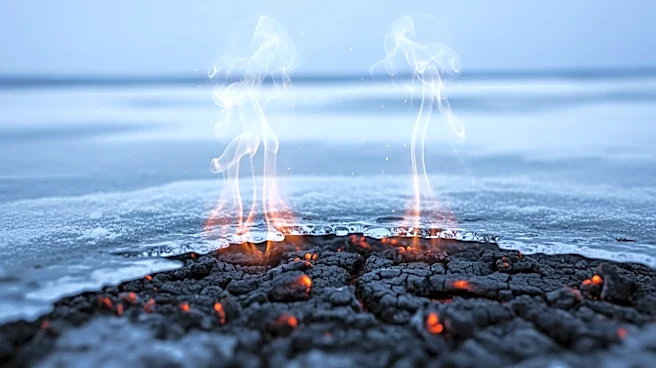
A new study has revealed that the melting of the Greenland ice sheet could release significant amounts of methane hydrates, also known as 'fire ice'. These hydrates, which form under high pressure and low
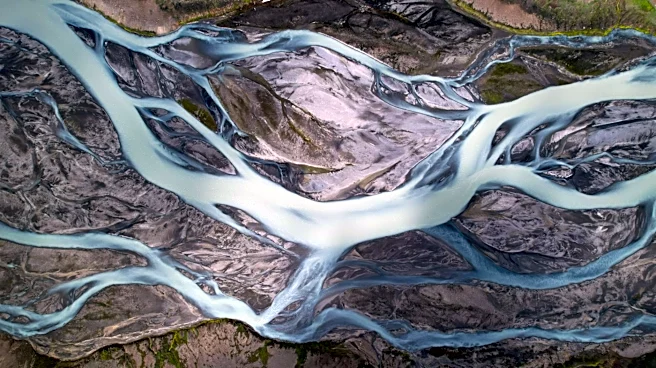
temperature conditions, are trapped in sediments beneath glaciers. The study found that meltwater from the ice sheet could flush out these hydrates, potentially releasing large quantities of methane, a potent greenhouse gas. This discovery raises concerns about the impact of climate change on methane emissions, as similar conditions exist across the Arctic, where other glaciers are also retreating.
Why It's Important?
The potential release of methane from melting ice sheets poses a significant threat to global climate stability. Methane is a powerful greenhouse gas, and its release could accelerate climate change, leading to more severe weather patterns and environmental disruptions. The study highlights the need for urgent action to address climate change and mitigate its effects. Understanding the mechanisms behind methane release from ice sheets is crucial for developing strategies to manage and reduce greenhouse gas emissions.
What's Next?
Researchers are likely to continue studying the impact of glacial melt on methane emissions, focusing on other regions with similar conditions. Policymakers may need to consider the implications of these findings in climate change mitigation strategies, potentially increasing efforts to reduce carbon emissions and transition to renewable energy sources. The study also underscores the importance of international cooperation in addressing the global challenge of climate change.