









What's Happening?
The Trump administration has implemented significant changes to immigration policies, affecting spouses of U.S. citizens. These changes include pausing immigrant visas for individuals from 75 countries, increasing scrutiny at green-card interviews, and
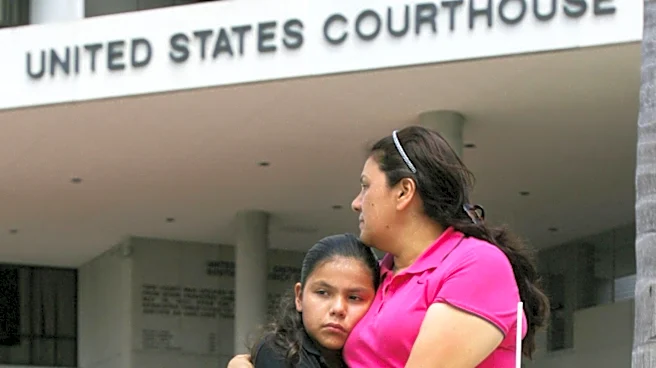
expanding deportation targets. These measures have led to delays and increased scrutiny for all immigration applications, impacting families who traditionally relied on marriage as a straightforward path to citizenship. The changes have resulted in some spouses or fiancés being left without legal status, causing a chilling effect on families' willingness to engage with the immigration process.
Why It's Important?
The policy changes have significant implications for U.S. citizens married to non-citizens, as they disrupt a previously reliable pathway to citizenship. This affects not only the individuals directly involved but also the broader immigration system, as family sponsorship is a major component of green-card approvals. The increased scrutiny and delays could deter families from pursuing legal immigration processes, potentially leading to more undocumented residents. The changes also highlight the administration's broader efforts to tighten immigration controls, which could have long-term effects on U.S. demographics and labor markets.
What's Next?
The ongoing policy changes may lead to further legal challenges and advocacy efforts from affected families and immigration rights groups. As the administration continues to enforce these policies, there may be increased pressure on lawmakers to address the concerns of U.S. citizens with non-citizen spouses. The situation could also prompt discussions on immigration reform and the balance between national security and family reunification.
Beyond the Headlines
The policy changes raise ethical and legal questions about the treatment of non-citizen spouses and the potential violation of their rights. The increased scrutiny and potential for deportation may lead to family separations and emotional distress. Additionally, the policies could strain U.S. relations with countries affected by the visa pauses and travel bans, impacting diplomatic and economic ties.