




What's Happening?
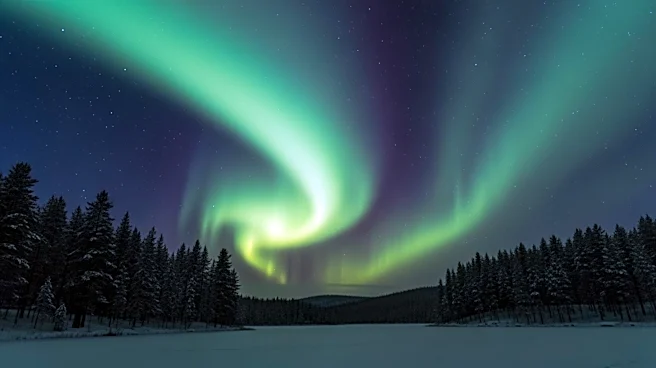
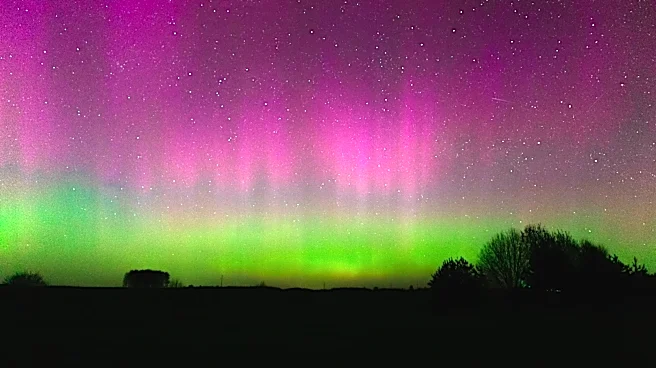
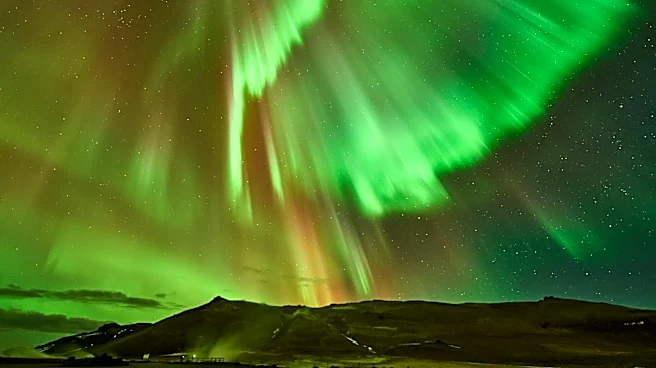
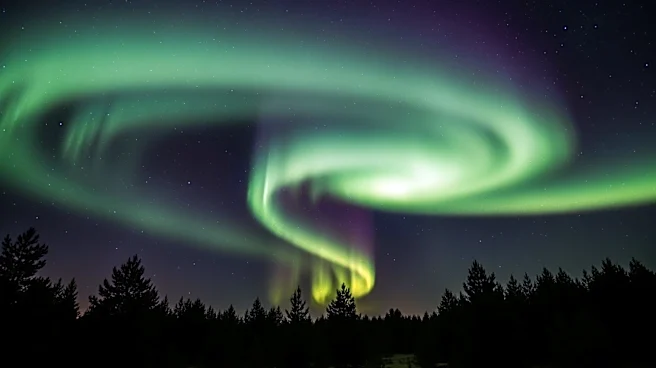
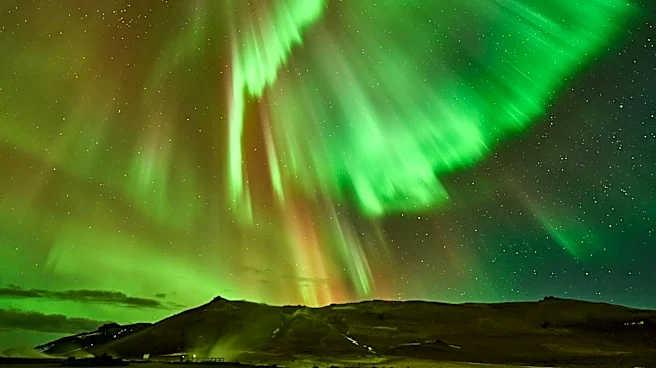
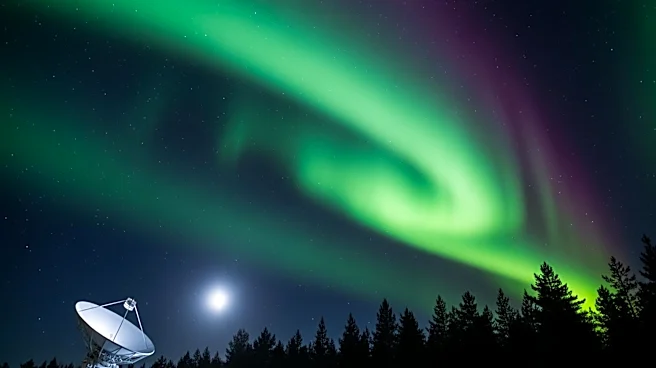
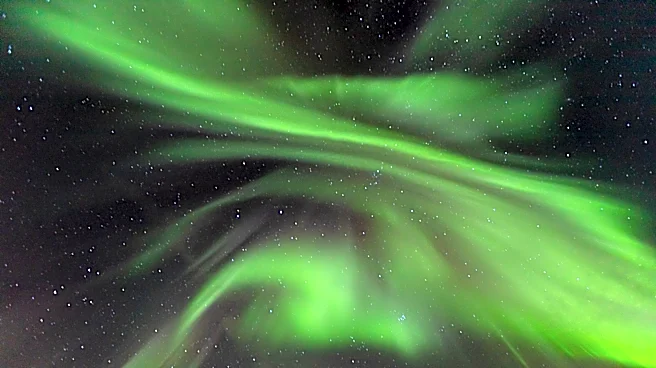
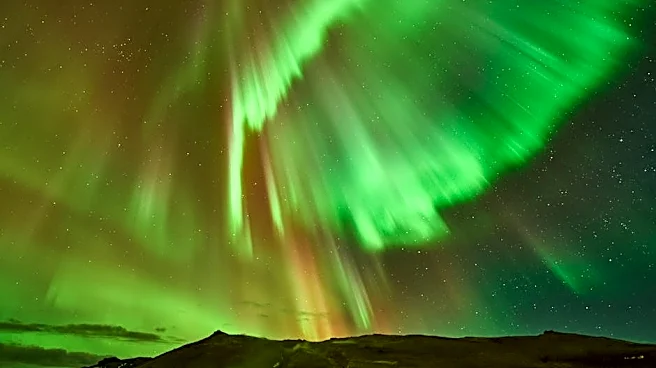
The National Oceanic and Atmospheric Administration (NOAA) has forecasted a moderate to strong geomagnetic storm, which could make the northern lights visible from Illinois. The storm is expected to reach G2 'moderate' to G3 'strong' conditions from Thursday
into Friday, with the potential to wane to G1 'minor' conditions by late Friday. The visibility of the aurora borealis in Illinois will depend on the storm's intensity and timing. NOAA's forecast suggests that G3 conditions are necessary for the northern lights to be seen as far south as Illinois. The geomagnetic storm could also cause intermittent satellite navigation and low-frequency radio navigation issues. NASA advises that the best viewing conditions are in areas with little to no light pollution, and recommends using a camera with long exposure settings to capture the auroras.
Why It's Important?
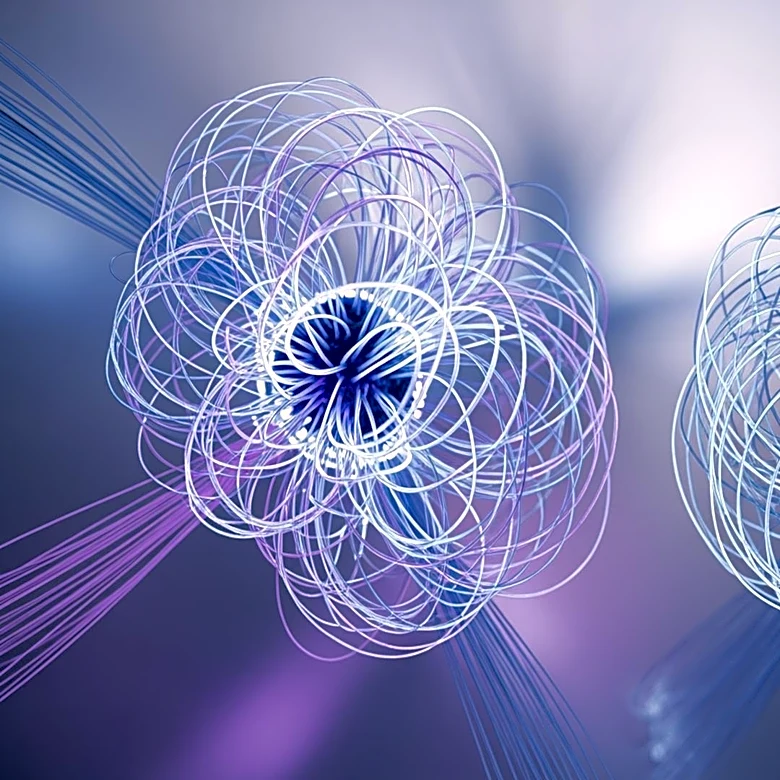
The potential visibility of the northern lights in Illinois is a rare event, as such displays are typically confined to higher latitudes. This occurrence highlights the impact of geomagnetic storms on both natural phenomena and technological systems. The storm's potential to disrupt satellite and radio communications underscores the importance of monitoring space weather, which can have significant implications for navigation and communication systems. For residents and enthusiasts, this event offers a unique opportunity to witness a natural spectacle that is not commonly visible in the region. The event also serves as a reminder of the interconnectedness of solar activity and terrestrial effects, emphasizing the need for continued research and preparedness in managing space weather impacts.
What's Next?
As the geomagnetic storm progresses, NOAA will continue to update its forecasts, providing guidance on the storm's development and potential impacts. Residents interested in viewing the northern lights are advised to stay informed through NOAA's updates and to prepare for optimal viewing conditions by finding dark, open areas away from city lights. The storm's effects on communication systems will be monitored, and any significant disruptions will likely prompt responses from relevant agencies to mitigate impacts. The scientific community will also be observing the storm to gather data that could enhance understanding of geomagnetic phenomena and improve future forecasting capabilities.