



What's Happening?
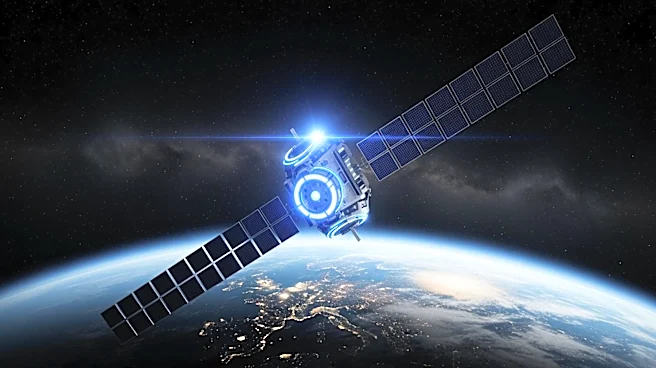
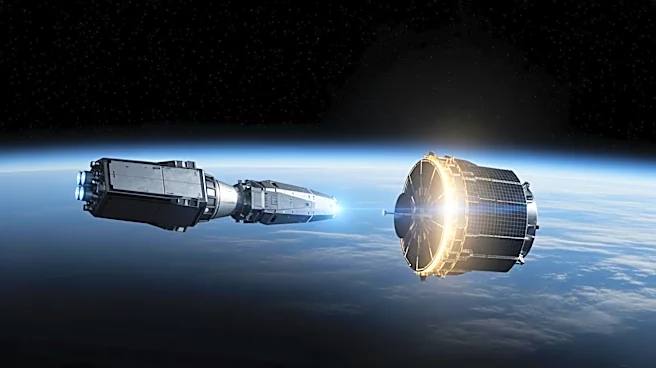
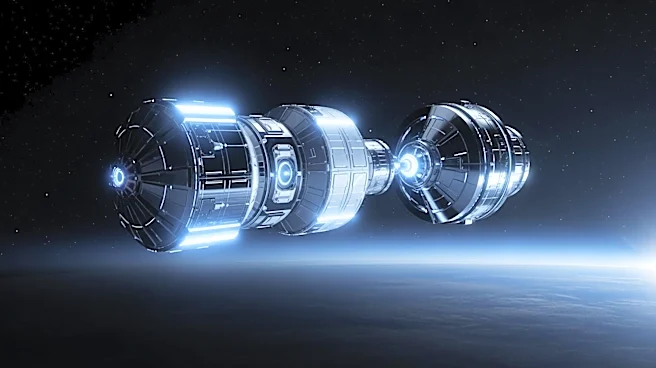
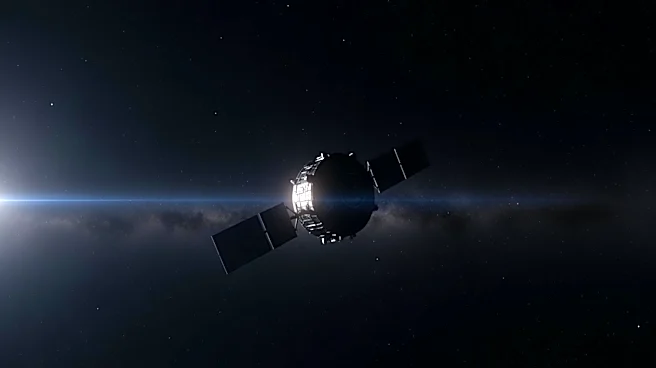
The LINK robotic servicing spacecraft, developed by Katalyst Space, has arrived at NASA's Wallops Flight Facility in Virginia. This spacecraft is set to be integrated into a Pegasus XL rocket by Northrop Grumman engineers. The mission aims to capture
and boost the Neil Gehrels Swift Observatory, which has been experiencing increased atmospheric drag due to heightened solar activity. This drag has caused the observatory to lose altitude faster than expected. The LINK spacecraft will help restore the observatory to a higher orbit, allowing it to continue its scientific observations. The Pegasus XL rocket, once loaded with LINK, will be attached to Northrop Grumman's Stargazer aircraft and launched from above Kwajalein Atoll in the South Pacific Ocean later this month.
Why It's Important?
This mission is significant as it represents a pioneering effort in spacecraft servicing, potentially extending the operational life of satellites in low Earth orbit. By boosting the Swift Observatory, NASA can continue its valuable scientific research without the need for a new satellite, saving resources and time. The success of this mission could pave the way for future satellite servicing missions, enhancing the sustainability of space operations. This development is crucial for maintaining the United States' leadership in space exploration and technology, as well as for the continued study of cosmic phenomena.
What's Next?
Following the integration of the LINK spacecraft into the Pegasus XL rocket, the next step involves the launch from the Stargazer aircraft. Once in orbit, LINK will perform the necessary maneuvers to reach and boost the Swift Observatory. The success of this mission could lead to more frequent use of robotic servicing spacecraft, potentially becoming a standard practice for extending the life of satellites. Stakeholders in the aerospace industry will be closely monitoring the mission's outcome, as it could influence future satellite design and mission planning.