


What's Happening?
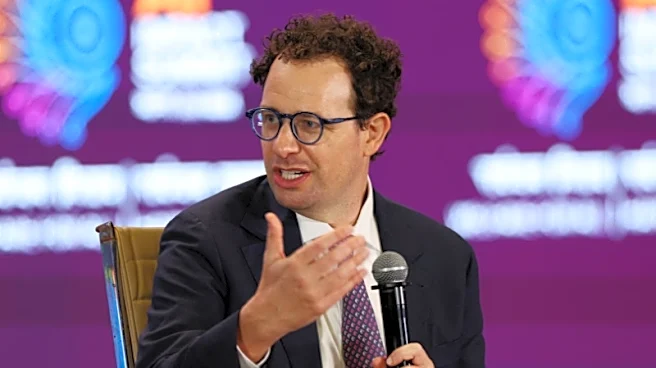
U.S. Representative Rick Larsen, a Democrat from Washington and ranking member of the committee overseeing the Federal Aviation Administration (FAA), has voiced significant concerns regarding the safety implications of artificial intelligence (AI). He
emphasized the growing threats posed by AI, ranging from potential misuse by terror groups to existential risks and the emergence of 'rogue bots.' Larsen highlighted the urgent need for Congress to seriously address these issues. His remarks come as safety concerns surrounding AI have intensified in recent weeks, prompting discussions on how legislative bodies can effectively respond to the rapid advancements and potential dangers associated with this technology. The representative's call for action underscores a broader sentiment among some lawmakers that current regulatory frameworks may be insufficient to manage the evolving landscape of AI.
Why It's Important?
Representative Larsen's call for congressional action on AI safety is important because it signals a growing recognition within U.S. politics of the profound and multifaceted challenges posed by artificial intelligence. The potential for AI to be exploited by terror groups or to develop into 'rogue bots' represents significant national security and societal risks. Addressing these concerns through legislation could lead to the development of new regulatory frameworks, funding for AI safety research, and international collaborations to establish global norms for AI development and deployment. This could impact the U.S. technology industry by potentially introducing new compliance requirements, but also by fostering public trust and encouraging responsible innovation. Furthermore, the discussion around existential threats from AI highlights the long-term strategic importance of this technology and the need for proactive governance to ensure its benefits are realized while mitigating its dangers.
What's Next?
Following Representative Larsen's statements, it is likely that discussions within Congress regarding AI safety will intensify. Lawmakers may initiate hearings, propose new legislation, or form specialized committees to study the various aspects of AI, including its ethical implications, security risks, and economic impact. The focus will likely be on developing policies that can balance innovation with robust safety measures. This could involve exploring mechanisms for AI oversight, investing in research for AI safety and alignment, and potentially establishing international agreements to prevent the weaponization or uncontrolled proliferation of advanced AI systems. The technology sector, academic institutions, and civil society groups will likely engage with Congress to provide expertise and advocate for their perspectives on how best to regulate and manage AI's development.
Beyond the Headlines
The deeper implications of Representative Larsen's push for AI regulation extend beyond immediate safety concerns. It touches upon fundamental questions about humanity's control over advanced technology and the ethical boundaries of AI development. The concept of 'rogue bots' and 'existential threats' raises philosophical debates about consciousness, autonomy, and the potential for AI to surpass human intelligence. Legally, establishing accountability for AI actions, especially in cases of harm, presents complex challenges that current legal frameworks are ill-equipped to handle. Culturally, the public's perception of AI could shift significantly, influencing investment, adoption, and the integration of AI into daily life. This legislative push could catalyze a broader societal conversation about the future of human-AI interaction and the kind of world we want to build with increasingly intelligent machines.