





What's Happening?
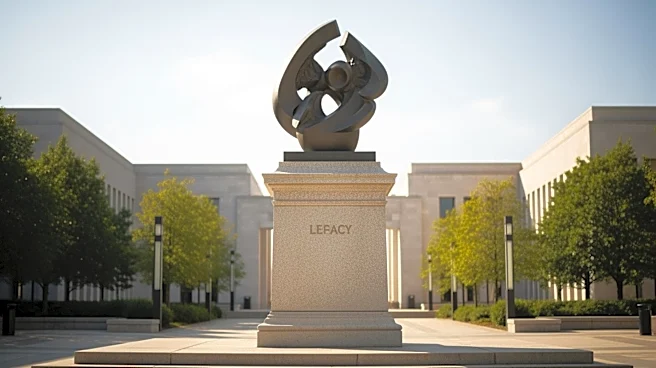
New statues have been installed at Freedom Plaza in Washington, D.C., including one of Caesar Rodney, a historical figure known for signing the Declaration of Independence and being an enslaver. The installation of these statues has been noted by local
observers, with some expressing surprise at the addition. The statues are part of a broader effort to commemorate historical figures in prominent public spaces. The presence of these statues at a significant location like Freedom Plaza highlights ongoing discussions about how history is represented in public art and monuments.
Why It's Important?
The installation of statues at Freedom Plaza is significant as it reflects ongoing debates about the representation of historical figures in public spaces. Statues and monuments often serve as focal points for discussions about history, memory, and identity. The inclusion of figures like Caesar Rodney, who have complex legacies, can provoke public discourse about the values and narratives that are celebrated in public art. This development may influence how other cities approach the commemoration of historical figures, potentially leading to broader discussions about inclusivity and historical accuracy in public monuments.
What's Next?
The installation of these statues may lead to public discussions or debates about their appropriateness and the messages they convey. Local government and community groups might engage in dialogues about the selection of figures for public commemoration. There could also be calls for additional context or educational materials to accompany the statues, providing a more nuanced understanding of the historical figures represented. Future decisions about public art installations in Washington, D.C., and elsewhere may be influenced by the reactions to these statues.
Beyond the Headlines
The presence of these statues at Freedom Plaza could have deeper implications for how history is taught and understood in the United States. It raises questions about whose stories are told and how they are presented in public spaces. This development might encourage educational institutions and cultural organizations to explore more comprehensive narratives that include diverse perspectives. Additionally, it could prompt discussions about the role of public art in shaping collective memory and identity, potentially leading to a reevaluation of existing monuments and the creation of new ones that reflect a broader range of historical experiences.