



What's Happening?
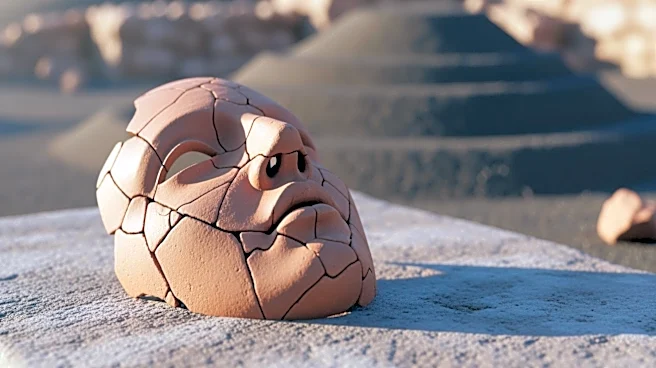
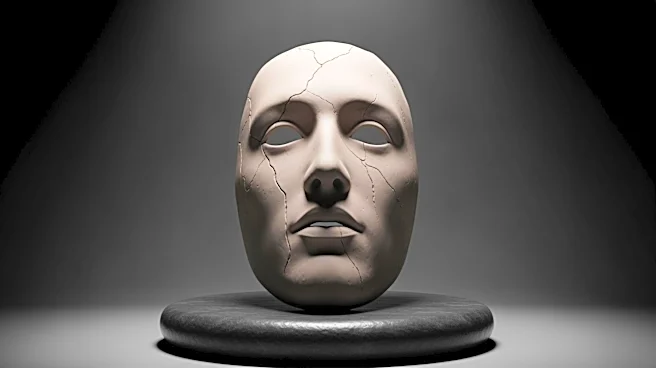
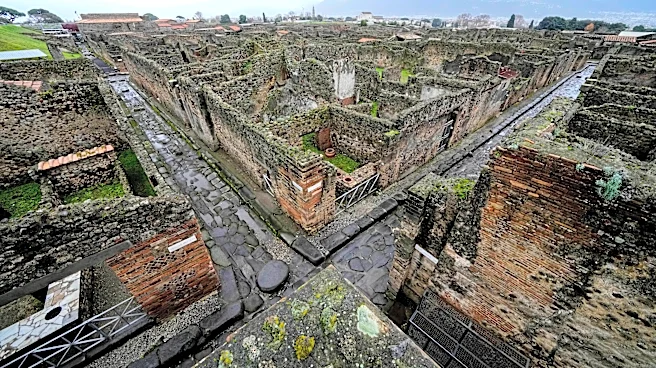
Archaeologists at Pompeii have utilized artificial intelligence to digitally reconstruct the face of a man who perished during the AD 79 eruption of Mount Vesuvius. This marks the first time AI has been employed in such a manner at the site. The reconstruction
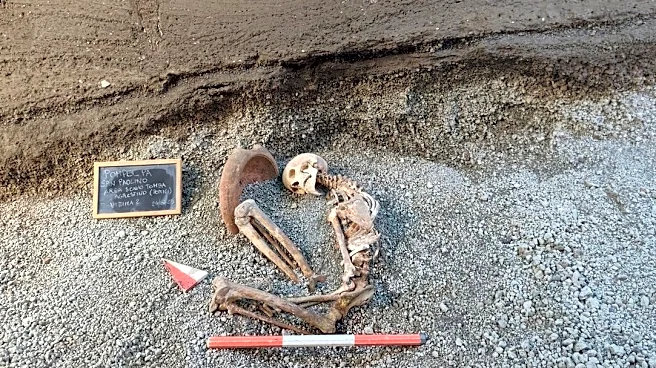
was based on archaeological data from excavations near the Porta Stabia necropolis. The digital portrait aims to provide a realistic depiction of the man, who was found with personal items such as an oil lamp and coins, offering insights into his final moments and daily life in ancient Pompeii.
Why It's Important?
The use of AI in archaeology represents a significant advancement in the field, allowing for more detailed and accurate reconstructions of historical figures. This technology enhances the understanding of historical events and personalizes the narratives of those who lived through them. By making archaeological research more accessible and engaging, AI can foster greater public interest and support for historical preservation. The project also demonstrates the potential of AI to revolutionize classical studies by managing and interpreting vast amounts of archaeological data.