
What's Happening?
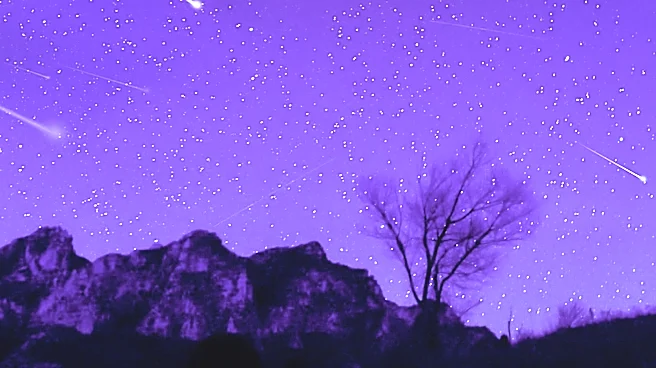
Summit County residents are preparing for a series of celestial events throughout November, including two meteor showers and a Beaver supermoon. The Northern Taurid meteor shower is expected to peak on November 9,
coinciding with a new moon, which should provide optimal viewing conditions for its characteristic bright fireballs, despite a low hourly rate of approximately three meteors. Following this, the Leonids meteor shower will be active from November 6 through November 30, with its peak anticipated between November 16-18. NASA and The Old Farmer’s Almanac provide slightly different peak dates for the Leonids, which originate from debris left by comet 55P/Tempel-Tuttle. While the Leonids are known for their speed and potential brightness, viewing conditions for 2026 will be affected by a waxing gibbous moon, reducing the expected visible meteors to around 10 per hour under ideal conditions, or fewer than three per hour according to NASA's more conservative forecast. A meteor storm is not predicted for this year.
Why It's Important?
These celestial events offer unique opportunities for public engagement with astronomy and natural phenomena, encouraging residents to observe the night sky. The timing of the Northern Taurids with a new moon is particularly significant, as the absence of moonlight enhances the visibility of fainter meteors and fireballs, making it an ideal time for casual stargazers. The Leonids, while potentially hampered by moonlight this year, remain a well-known annual shower, providing a consistent point of interest for astronomy enthusiasts. Such events can foster a greater appreciation for science and the cosmos, potentially inspiring future generations in STEM fields. For local communities, these events can also boost astrotourism, drawing visitors to areas with dark skies, thereby contributing to local economies. The varying predictions from NASA and The Old Farmer’s Almanac highlight the dynamic nature of meteor shower forecasting and the factors influencing visibility.
What's Next?
Skywatchers in Summit County and beyond are advised to find dark locations away from city lights, allow their eyes 20-30 minutes to adjust, and dress warmly for optimal viewing of the meteor showers. The Beaver supermoon, reaching peak illumination on November 24, will offer another spectacle, appearing slightly larger and brighter than a typical full moon. Observers are recommended to watch on the evenings of November 23 and 24 due to the moon's position at peak illumination. Additionally, Uranus will be at opposition on November 25, making it visible throughout the night, though binoculars or a telescope will be necessary for a clear view. These events collectively provide a month-long series of astronomical observations, encouraging public participation in stargazing and fostering a connection with the natural world.
Beyond the Headlines
The consistent occurrence of meteor showers and supermoons serves as a powerful reminder of the predictable yet awe-inspiring cycles of our solar system. These events, often observed by millions, underscore humanity's enduring fascination with the cosmos and our place within it. The traditional naming of the Beaver Moon, linked to historical practices like the fur trade, also connects modern astronomical observation with cultural heritage and the changing seasons. In an increasingly digital world, the simple act of looking up at the night sky offers a profound opportunity for reflection, wonder, and a shared human experience that transcends geographical and cultural boundaries. The accessibility of these events, requiring minimal equipment beyond warm clothing and patience, democratizes astronomical observation, making it a universal pastime.