

What's Happening?
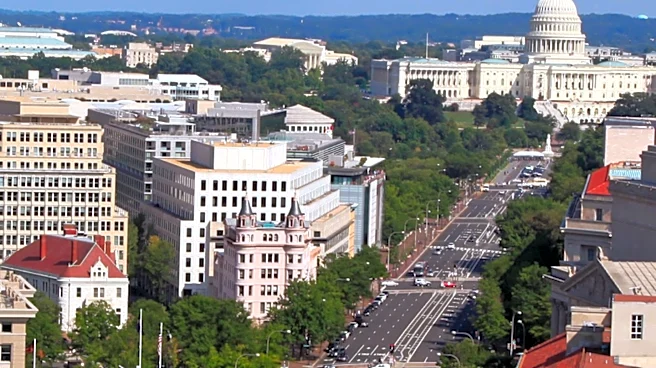
We'wha (1849-1896), a Zuni lhamana, visited Washington, D.C., in 1886 and met with President Grover Cleveland and numerous members of Congress. A lhamana in the Zuni tribe was an individual who embodied both masculine and feminine traits and roles, existing
outside the traditional gender binary. During We'wha's visit, the political figures she encountered, including President Cleveland, assumed she was a cisgender woman. The original caption for a photograph of We'wha used the term 'berdache,' which is now considered an outdated and offensive anthropological term.
Why It's Important?
We'wha's visit to Washington, D.C., in 1886 highlights the historical presence and cultural significance of gender diversity within Indigenous communities, specifically the Zuni tribe. The fact that President Cleveland and members of Congress misidentified We'wha's gender identity underscores a historical lack of understanding and recognition of diverse gender roles by mainstream American society. This event is important for understanding the historical interactions between Indigenous peoples and the U.S. government, revealing cultural differences and the challenges of cross-cultural communication and recognition. It also sheds light on the evolution of terminology and understanding regarding gender identity over time.
What's Next?
The historical record of We'wha's visit continues to be a subject of study for historians and cultural researchers, contributing to a broader understanding of Indigenous gender roles and historical interactions. Educational institutions and museums may continue to feature We'wha's story as part of exhibits on Native American history and gender diversity. The ongoing re-evaluation of historical terms, such as 'berdache,' reflects a broader societal shift towards more respectful and accurate language when discussing Indigenous cultures and gender identities. This historical account serves as a reminder of the importance of cultural sensitivity and accurate representation in contemporary discourse.
Beyond the Headlines
We'wha's story offers a profound insight into the rich and complex understanding of gender that existed in many Indigenous cultures long before Western societies began to grapple with similar concepts. The misidentification by U.S. political figures of the time reveals a cultural blind spot that has persisted for centuries, impacting policies and perceptions of Indigenous peoples. This historical event encourages a deeper examination of how dominant cultural norms can obscure or misinterpret diverse identities. It also underscores the ethical imperative to use respectful and accurate terminology when discussing historical figures and cultures, moving away from outdated and offensive labels to honor the true identities and roles of individuals like We'wha.