




What's Happening?
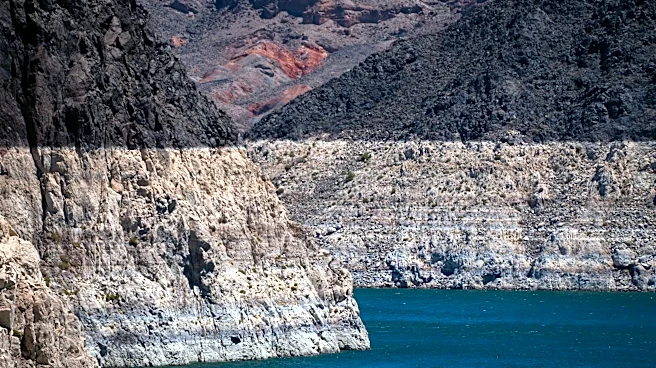
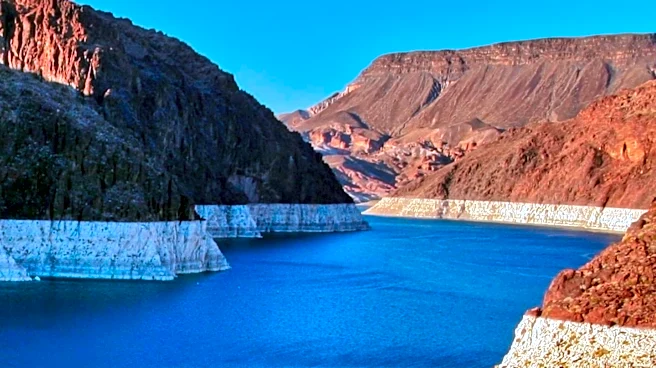
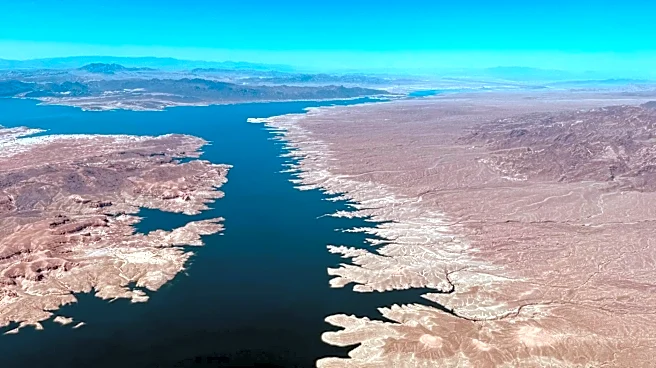
Lake Mead, the largest reservoir in the United States, has reached a new historic low, falling to 1,040.5 feet above sea level. This marks the lowest level since the reservoir was first filled in the 1930s. The reservoir, located behind the Hoover Dam
on the Arizona-Nevada border, is a critical water source for the Southwest, supplying drinking water to over 20 million people. The decline in water levels is attributed to below-average snowmelt runoff from the Rocky Mountains and a decision to retain more water in Lake Powell to protect its levels during a dry year. This has resulted in less water flowing into Lake Mead, exacerbating its decline.
Why It's Important?
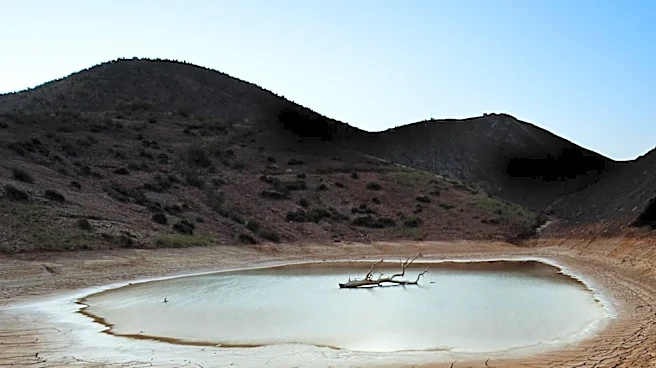
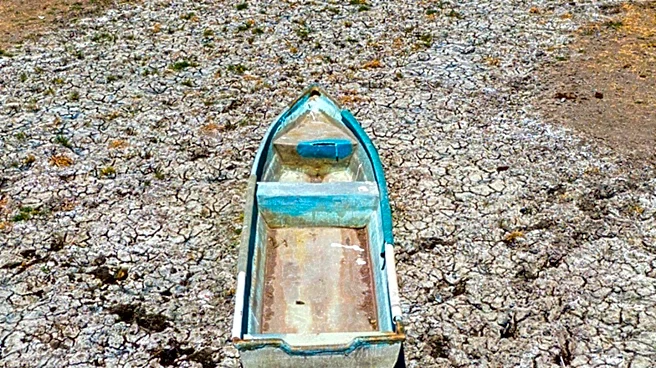
The drop in Lake Mead's water levels is significant as it threatens the water supply for millions of people and impacts agricultural irrigation in the region. The Colorado River Basin, which includes Lake Mead, is a vital water source for approximately 40 million people across seven states, tribal communities, and parts of Mexico. The decline in water levels could also reduce the hydropower capacity of the Hoover Dam by up to 40 percent, affecting energy supply. The situation underscores the urgent need for water conservation measures and highlights the challenges posed by climate change and prolonged drought conditions in the region.
What's Next?
In response to the water crisis, Colorado officials have announced a program to pay residents in Colorado, Utah, Wyoming, and New Mexico to use less water. Additionally, a federal plan could require Arizona, California, and Nevada to reduce their Colorado River water usage by up to 3 million acre-feet annually. These measures aim to address the immediate water shortage, but larger and more sustainable solutions will be necessary to ensure long-term water security in the region.