








What's Happening?
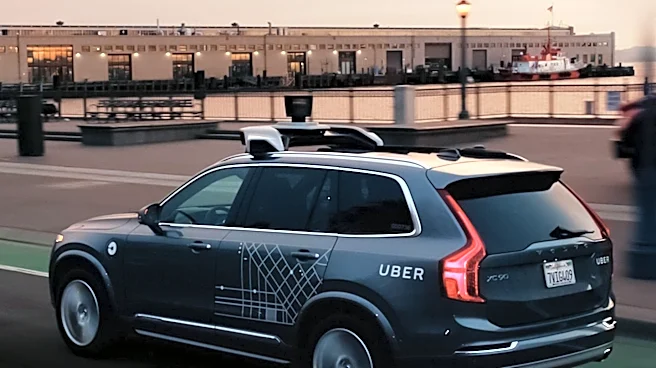
LydiaYah Lioness, an Uber driver in Wisconsin, shared a TikTok video featuring dashcam footage that appears to contradict a passenger's claim of almost being run over. The video, which has garnered 1.3 million views, shows Lioness driving to a pickup
spot and then waiting in her parked car. A woman approaches the vehicle and states that she was nearly hit, subsequently refusing the ride. Lioness's dashcam footage, presented in a split-screen format, shows the passenger walking slowly across the parking lot from a considerable distance, suggesting no immediate danger of a collision. On-screen text in the video indicates Lioness's perspective, noting that the passenger was sitting 'all the way off to the side' and was not initially seen by the driver. The incident highlights a dispute between a rideshare driver and a passenger, with the driver using technology to provide an account of the events.
Why It's Important?
This incident underscores the increasing reliance on dashcam technology for rideshare drivers to protect themselves against false accusations and to provide objective evidence in disputes. For the rideshare industry, such footage can be crucial in resolving conflicts between drivers and passengers, potentially influencing company policies regarding driver support and passenger conduct. The widespread sharing of this video on platforms like TikTok also brings public attention to the challenges faced by rideshare drivers, including verbal altercations and unsubstantiated claims. This can impact public perception of rideshare services and the safety of both drivers and passengers. Furthermore, it highlights the importance of clear communication and mutual respect in service interactions, as well as the role of verifiable evidence in mediating disagreements.
What's Next?
The incident, as presented in the viral video, is likely to continue generating discussion on social media regarding driver-passenger interactions and the use of dashcams. While the immediate outcome for the individuals involved is not detailed beyond the passenger refusing the ride, the broader implications for rideshare companies like Uber could include re-evaluating their dispute resolution processes and potentially encouraging or even mandating dashcam usage for drivers. This event may also prompt more drivers to invest in dashcam technology for their own protection. For passengers, it serves as a reminder that their actions and claims can be recorded and subject to scrutiny, potentially leading to more cautious behavior. The incident could also contribute to ongoing conversations about the gig economy and the rights and protections of its workers.
Beyond the Headlines
The incident touches upon deeper societal issues related to accountability, perception versus reality, and the impact of technology on interpersonal interactions. In an era where personal devices and dashcams can record events, the subjective experience of an individual can be challenged by objective evidence, leading to questions about truth and credibility. The driver's use of a dashcam to refute a claim speaks to a growing trend of individuals leveraging technology for self-protection and to document their experiences in public and semi-public spaces. This also raises ethical considerations about privacy and surveillance in the context of rideshare services. The public's reaction to the video, with many commenters siding with the driver, reflects a broader sentiment about the need for fairness and the potential for false accusations in service industries. It also highlights the emotional toll such encounters can take on service workers.