
What's Happening?
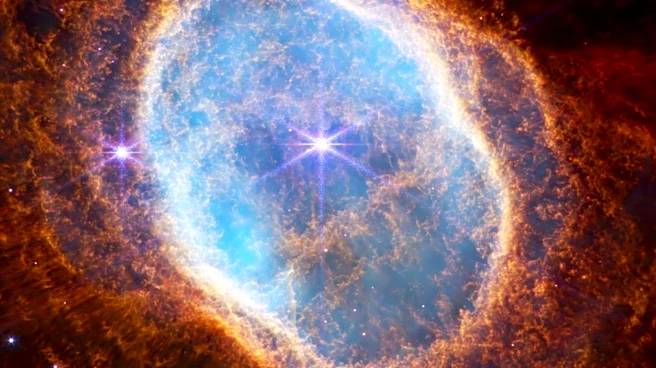
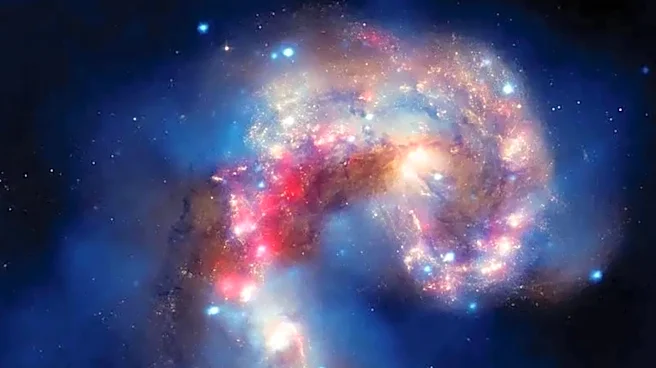
Astronomers have potentially witnessed, for the first time, a star engulfing its companion in the Andromeda galaxy. This event involved a red giant star, WNTR23bzdiq, located approximately 2.5 million
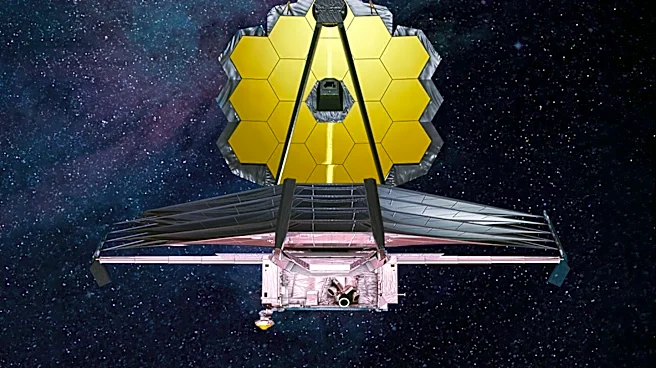
light-years away, which is about seven times larger and 350 times wider than our Sun. Researchers, using NASA's now-defunct NEOWISE space telescope and the WINTER telescope at Palomar Observatory in California, first observed the star brightening in 2023, with records indicating a gradual increase in luminosity since 2018. This brightening was theorized to be caused by the red giant engulfing a companion star, generating friction, heat, and light as the companion spiraled towards its core. Near the end of 2025, a significant eruption of light was observed from the giant star. NASA's James Webb Space Telescope then provided detailed observations 47 days after this eruption, allowing scientists to characterize the event. The current hypothesis suggests this explosion occurred when a companion star, roughly 70% the mass of the Sun, collided with the giant star's heart, expelling material equivalent to 0.1 to 0.2 times the Sun's mass.
Why It's Important?
This observation marks a significant milestone in astrophysics, providing the first direct evidence of a stellar merger, a phenomenon previously only theorized. Understanding how stars evolve and interact, particularly in binary systems, is crucial for refining our models of stellar dynamics and the life cycles of stars. Such events contribute to the chemical enrichment of galaxies and can influence the formation of new stars and planetary systems. The ability to directly observe these mergers, rather than inferring them from indirect evidence, opens new avenues for research and validates long-standing theoretical predictions. This discovery also highlights the advanced capabilities of telescopes like NASA's James Webb Space Telescope, which provided critical data for characterizing the event. Future observations with upcoming telescopes, such as the Nancy Grace Roman Space Telescope and the Vera Rubin Observatory, are expected to uncover more such events, further enhancing our understanding of the universe.
What's Next?
Scientists plan to continue monitoring the 'Bao' binary system to definitively determine the outcome of the event. While the current evidence strongly suggests a merger, researchers acknowledge the possibility that both stars survived in a much shorter orbit. Ongoing observations will be crucial to track the system's behavior as the eruption subsides. The success of this observation also sets the stage for future discoveries. Upcoming telescopes like the Nancy Grace Roman Space Telescope and the Vera Rubin Observatory are anticipated to be instrumental in identifying many more stellar merger events. These new instruments will provide broader and more sensitive sky surveys, increasing the chances of catching such subtle and rare cosmic dramas in action. The data gathered from these future observations will help refine current models of stellar evolution and binary star interactions.
Beyond the Headlines
The direct observation of a star engulfing its companion has profound implications beyond just confirming a theoretical prediction. It offers a unique window into the extreme physics governing stellar interactions, including the processes of mass transfer, energy release, and the eventual fate of binary star systems. This event challenges and refines our understanding of how stars die and how their remnants interact, potentially leading to new types of celestial objects or phenomena. The subtle nature of these events, as described by lead author Viraj Karambelkar, underscores the need for highly sensitive and long-duration astronomical surveys. This discovery also highlights the collaborative and iterative nature of scientific research, combining observations from multiple telescopes over several years to piece together a complex cosmic narrative. The ethical implications of space exploration, while not directly tied to this specific event, are always a consideration as humanity pushes the boundaries of observation and understanding of the cosmos.