

What's Happening?
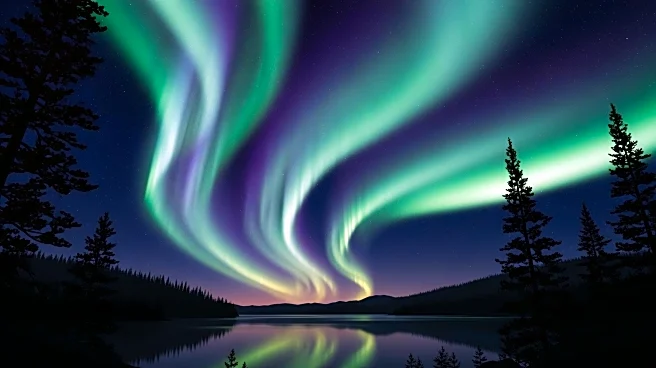
A powerful G3 geomagnetic storm is currently illuminating skies across the United States, providing a rare opportunity to witness the Northern Lights far beyond their usual Arctic confines. The storm, which began on March 22, is expected to continue through
the night, with optimal viewing between 10 PM and 2 AM local time. The auroras are visible in up to 20 northern and western U.S. states, including Washington, Oregon, and Minnesota. This event is part of the solar maximum phase, which is delivering frequent and intense solar eruptions, making March 2026 a peak period for aurora viewing.
Why It's Important?
The occurrence of a G3 geomagnetic storm presents a unique chance for millions of Americans to experience the Northern Lights, a phenomenon typically reserved for those in polar regions. This event not only offers a spectacular natural display but also serves as a reminder of the dynamic interactions between solar activity and Earth's magnetosphere. The increased visibility of auroras can boost local tourism and provide educational opportunities about space weather and its effects. However, such storms can also impact satellite operations and power grids, highlighting the need for preparedness in managing potential disruptions.
What's Next?
As the geomagnetic storm continues, observers are encouraged to find locations with minimal light pollution for the best viewing experience. The NOAA Space Weather Prediction Center will continue to monitor the storm's progress and provide updates. Future G3-level storms are expected to occur regularly through 2026, offering more opportunities for aurora enthusiasts. Scientists will study the data from this event to better understand solar activity and improve forecasting models, which are crucial for mitigating the impacts of space weather on technology and infrastructure.