



What's Happening?
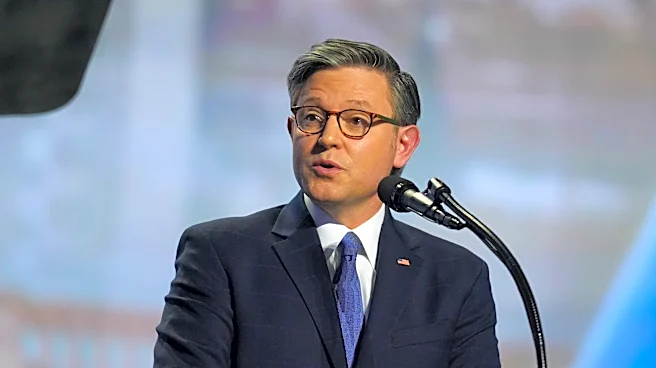
House Speaker Mike Johnson has announced that Congress will not take the lead in regulating Artificial Intelligence (AI) safety. Instead, Speaker Johnson is urging AI companies to proactively adopt their own safety protocols. He emphasized a need for
practical solutions rather than widespread panic regarding AI development. This stance indicates a preference for industry-led self-regulation over immediate legislative intervention from the federal government. Speaker Johnson's comments suggest a belief that the private sector is better positioned to understand and address the rapidly evolving challenges and opportunities presented by AI technology. This approach aims to foster innovation while still encouraging responsible development within the AI industry.
Why It's Important?
This position from House Speaker Mike Johnson is significant because it signals a hands-off approach from the legislative branch regarding AI regulation, at least for the immediate future. This could have substantial implications for the technology sector, potentially allowing AI companies greater freedom to innovate without immediate governmental oversight. While this might accelerate technological advancements, it also places a considerable burden of responsibility on these companies to ensure ethical development and safety. The lack of federal regulation could lead to a patchwork of varying industry standards, or it could spur a unified industry effort to establish robust, self-imposed guidelines. This decision will influence how the U.S. positions itself in the global AI landscape, potentially fostering a more agile and competitive domestic AI industry compared to regions with stricter regulatory frameworks.
What's Next?
Following Speaker Johnson's statement, the focus will likely shift to how AI companies respond to the call for self-regulation. Industry leaders and AI developers are expected to engage in discussions about establishing common safety protocols and ethical guidelines. This could involve the formation of industry consortiums or the strengthening of existing bodies dedicated to AI ethics and safety. There may also be increased pressure from civil society groups and the public for companies to demonstrate tangible commitments to responsible AI development. While direct congressional action is not anticipated immediately, future legislative discussions could arise if industry self-regulation proves insufficient or if significant AI-related incidents occur, prompting a re-evaluation of the current stance.
Beyond the Headlines
The decision by House Speaker Mike Johnson to defer AI safety regulation to the industry touches upon broader philosophical debates about the role of government in emerging technologies. It reflects a tension between fostering innovation through minimal intervention and ensuring public safety and ethical standards through robust oversight. This approach could set a precedent for how the U.S. government handles future disruptive technologies, potentially favoring market-driven solutions over legislative mandates. Long-term implications could include a more dynamic but potentially less standardized AI ecosystem in the U.S., contrasting with more regulated environments in other nations. This also raises questions about accountability should AI systems cause harm, as the primary responsibility would rest with the developers rather than being shared with a regulatory body.