



What's Happening?
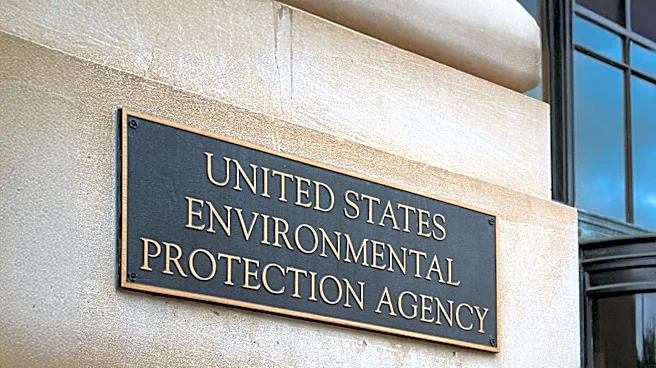
Residents of Indiana, known as Hoosiers, attended a public hearing held by the Environmental Protection Agency (EPA) to voice their opposition to weakening coal ash regulations. The hearing addressed Indiana's proposed Coal Ash permitting program, which
critics argue would allow the state to bypass federal protections in favor of less stringent statewide rules. Indiana has the highest number of coal ash dumps in the U.S., with over 100 landfills and ponds containing approximately 134 million cubic yards of toxic coal ash. Environmental groups like the Sierra Club contend that the Indiana Department of Environmental Management (IDEM) has a history of permitting dangerous coal ash contamination, and approving their application would leave communities vulnerable to further pollution.
Why It's Important?
The EPA's decision on Indiana's coal ash program has significant implications for public health and environmental protection in the state. Weakening federal regulations could expose communities, particularly those relying on well water, to increased risks from toxic coal ash contamination. Indiana's substantial volume of coal ash, equivalent to a football field piled nearly 12 miles high, underscores the scale of the potential hazard. The debate highlights the tension between state-level regulatory autonomy and the need for robust federal oversight to protect citizens from industrial pollution. The outcome will set a precedent for how other states manage coal ash and could influence the balance of power between state and federal environmental agencies.
What's Next?
The EPA is currently considering Indiana's application for its Coal Ash permitting program. Following the public hearing, the agency will evaluate the input from Hoosiers and environmental groups. The Sierra Club and other advocates are urging the EPA to reject Indiana's proposal and ensure that federal coal ash rules are enforced to protect communities. The decision will determine whether Indiana can implement its own, potentially less stringent, regulations or if it must adhere to federal standards. This process will likely involve further review and potentially legal challenges depending on the EPA's final ruling.
Beyond the Headlines
This issue delves into the broader challenge of managing industrial waste and its long-term environmental and health consequences. Coal ash, a byproduct of coal-fired power plants, contains heavy metals and other toxic substances that can leach into groundwater and soil. The struggle in Indiana reflects a national debate over environmental justice, as low-income communities and communities of color are often disproportionately affected by pollution from industrial sites. The outcome of this regulatory battle could influence future environmental policy, emphasizing the need for strong federal safeguards to prevent states from rolling back protections and creating 'sacrifice zones' where residents bear the brunt of industrial pollution.