
What's Happening?
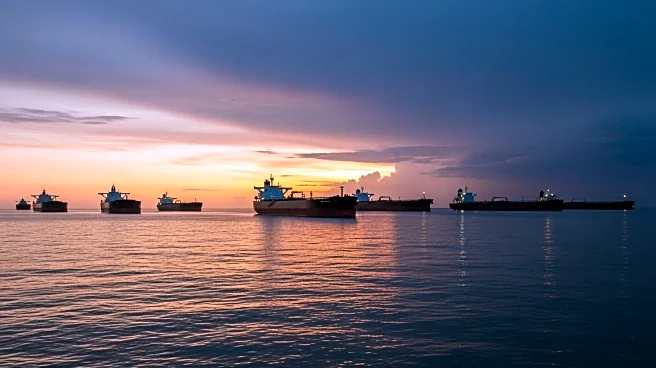
Satellite imagery has revealed that at least 11 oil tankers under U.S. sanctions have moved beyond Venezuelan waters, defying a maritime blockade imposed by President Trump. The blockade is part of the
U.S. administration's strategy to pressure Venezuela's interim government. The tankers, carrying an estimated 9.4 million barrels of oil, were spotted in various locations, including the Caribbean Sea and the Atlantic Ocean. Some of these vessels are reportedly being monitored by U.S. Navy ships. The blockade aims to restrict the movement of oil tankers under sanctions, but the recent movements raise questions about its effectiveness.
Why It's Important?
The ability of these tankers to evade the blockade challenges the U.S.'s efforts to control oil exports from Venezuela, a key economic lever against the Venezuelan government. This situation underscores the difficulties in enforcing international sanctions and maintaining maritime security. The defiance by these tankers could embolden other sanctioned entities to attempt similar actions, potentially undermining U.S. foreign policy objectives. The incident also highlights the geopolitical tensions involving major oil-producing nations and the strategic importance of maritime routes for global energy supplies.
What's Next?
The U.S. may need to reassess its blockade strategy and consider additional measures to enforce sanctions. Diplomatic efforts could be intensified to address the challenges posed by these defiant actions. The situation may also lead to increased military presence in the region to deter further violations. International responses, particularly from countries with vested interests in Venezuelan oil, could influence future U.S. actions. The effectiveness of the blockade will likely be scrutinized by policymakers and international observers.