









What's Happening?
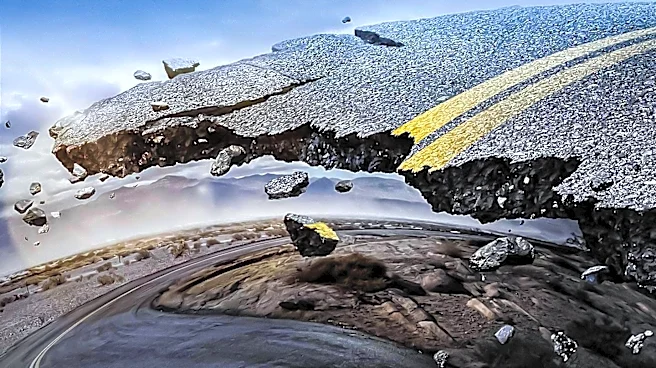
A recent heat wave over the Fourth of July weekend caused significant damage to roads across the eastern United States, highlighting the growing impact of climate change on infrastructure. In particular, a section of Interstate 97 south of Baltimore experienced
severe buckling, leading to lane closures. Similar incidents were reported in Chicago and other areas, prompting warnings from state transportation departments about potential heat-related road failures. Experts, including Charles Marohn of Strong Towns, explain that extreme heat causes moisture-weakened pavements to expand and warp, leading to cracks and buckling. Concrete roads, while more durable, can fail dramatically under such conditions, whereas asphalt roads, though easier to repair, tend to form ruts in high temperatures.
Why It's Important?
The increasing frequency and intensity of heat waves due to climate change pose a significant challenge to the U.S. transportation infrastructure. Roads are not only essential for daily commutes but also for the transportation of goods and services. The damage caused by extreme temperatures can lead to costly repairs and significant disruptions. Civil engineers are now faced with the task of designing roads that can withstand these new climate realities. This situation underscores the need for updated infrastructure planning and investment to ensure roads can handle future climate conditions, which could otherwise lead to increased maintenance costs and economic disruptions.
What's Next?
To address these challenges, engineers are considering more durable materials and designs for road construction. This includes using reinforced steel in concrete roads and adjusting the composition of asphalt to better withstand high temperatures. However, these solutions come with higher costs, and decisions must balance durability with budget constraints. Additionally, improved climate data is needed to inform these designs, ensuring they are prepared for future extreme weather events. As the climate continues to change, infrastructure planning will need to adapt, potentially requiring significant policy shifts and increased funding for resilient infrastructure projects.