







What's Happening?
The latest issue of the AILA Law Journal features an article by Pavitra Antony titled 'National Security, Public Order, and the Limits of Non-Refoulement: U.S. Border Policy Under Article 33(2) of the 1951 Refugee Convention (Post-2025 Developments).'
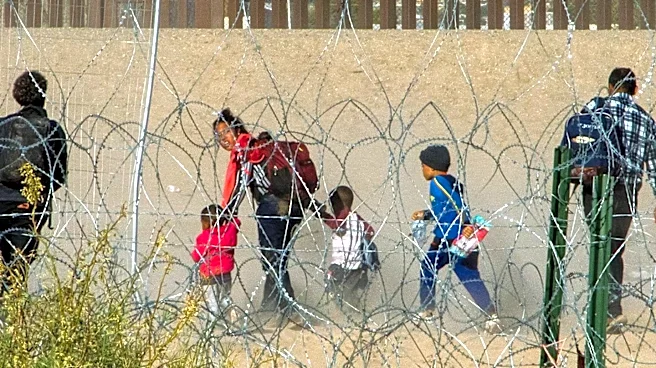
This article critically assesses whether U.S. border policies enacted after 2025 align with the international legal principle of non-refoulement, which prohibits countries from returning refugees to places where they face threats to their life or freedom. Antony's research concludes that blanket exclusions and removals of asylum seekers by the U.S. violate its obligations under the 1967 Protocol Relating to the Status of Refugees. The paper argues that such policies undermine a fundamental cornerstone of refugee protection, suggesting a potential divergence between U.S. domestic practices and international humanitarian law. The journal issue also includes other articles discussing various complex aspects of immigration law, such as proving alienage in removal cases, administrative proxies in USCIS adjudications, and the reviewability of discretionary decisions.
Why It's Important?
This analysis from the AILA Law Journal is significant because it directly challenges the legality and ethical implications of current and projected U.S. border policies under international law. If U.S. policies are found to be in violation of the principle of non-refoulement, it could have profound consequences for asylum seekers, potentially leading to their return to dangerous situations. Such findings can also impact the U.S.'s standing on the international stage, potentially drawing criticism from human rights organizations and other nations. Domestically, it could fuel legal challenges against government actions, leading to prolonged litigation and calls for policy reforms. The debate over border security versus humanitarian obligations is a central theme in U.S. immigration policy, and this article provides a legal framework for understanding potential conflicts and their broader societal and political ramifications. It highlights the ongoing tension between national security concerns and international human rights commitments.
What's Next?
The findings presented in the AILA Law Journal article could serve as a basis for advocacy groups and legal practitioners to challenge U.S. border policies that they deem to be in violation of international law. This may lead to increased litigation in federal courts, seeking to enjoin or overturn specific policies related to asylum processing and removals. Furthermore, the article's conclusions could influence legislative debates and policy discussions within Congress and the executive branch regarding immigration reform. Policymakers may face pressure to re-evaluate existing border strategies to ensure compliance with international obligations, potentially leading to adjustments in how asylum claims are processed and how individuals are treated at the border. International bodies and human rights organizations may also cite such analyses in their reports and recommendations concerning U.S. immigration practices, increasing external pressure for policy changes.
Beyond the Headlines
The discussion around U.S. border policy and non-refoulement delves into the fundamental ethical and legal principles governing how nations treat vulnerable populations. Beyond the immediate legal challenges, a persistent divergence between U.S. policy and international refugee law could erode the moral authority of the U.S. in global human rights discussions. It also raises deeper questions about the balance of national sovereignty versus universal human rights obligations. The long-term implications could include a redefinition of asylum processes, potentially leading to more robust legal protections for asylum seekers or, conversely, a further hardening of border policies if the U.S. chooses to prioritize national security interpretations over international legal norms. This ongoing tension reflects a broader global debate about migration, sovereignty, and humanitarian responsibility in an increasingly interconnected world, with significant cultural and societal impacts on how the U.S. views its role as a protector of human rights.