





What's Happening?
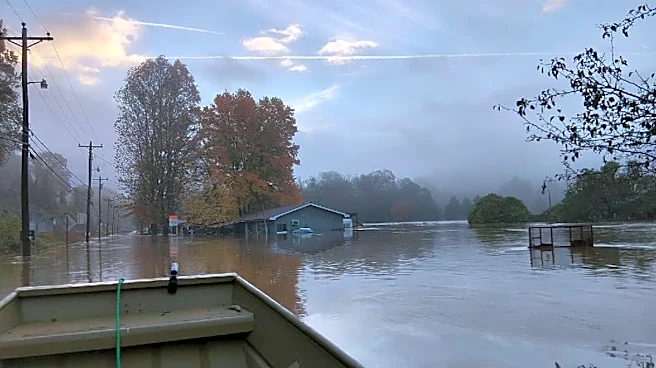
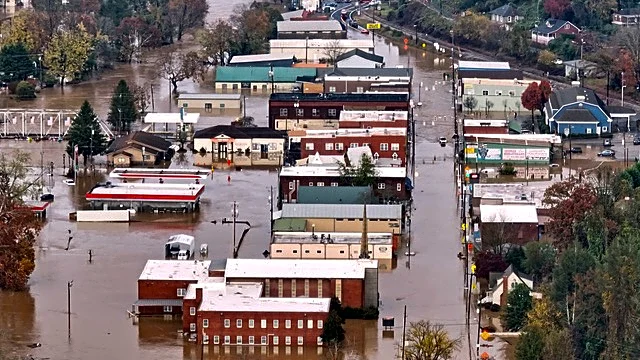
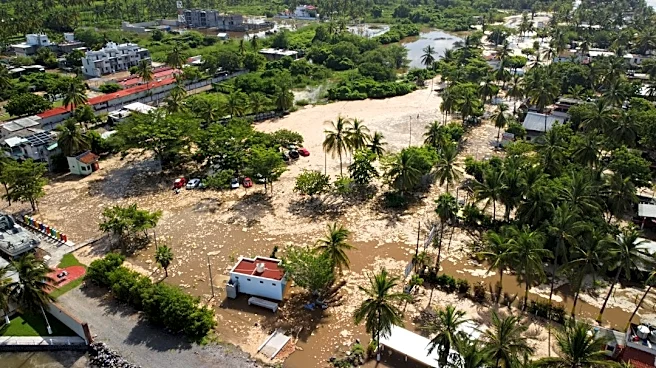
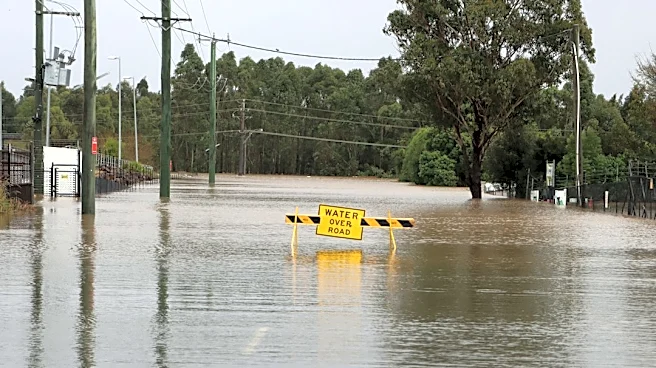
Record flooding occurred in the twin towns of McCaysville, Georgia, and Copperhill, Tennessee, due to heavy overnight rains. The storms caused the Toccoa River to swell, reaching a record high of 18 feet in Copperhill, 2 feet above what forecasters consider
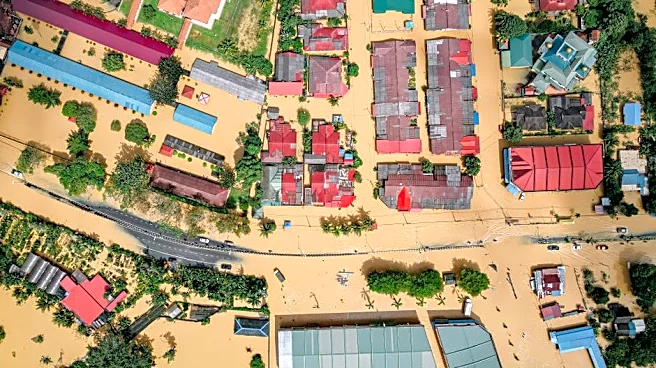
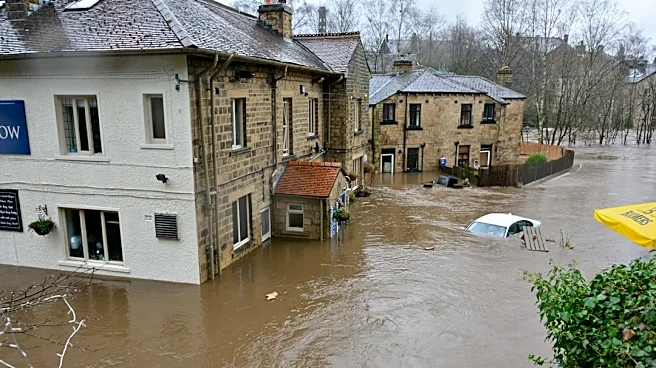
'catastrophic.' Some buildings were submerged to their rooflines, and emergency responders rescued at least 57 people in Georgia and 68 in Tennessee using swift water teams. McCaysville Police Chief Michael Earley reported that the water reached 6-7 feet high in the downtown area, with one police car floating down the river. The flooding also led to cellphone and power outages, shut down McCaysville's water treatment plant, and prompted a boil water advisory. Residents returned to find significant debris and ruined businesses, with one store owner estimating $200,000 to $300,000 in inventory damage.
Why It's Important?
This severe flooding event underscores the immediate and devastating impact of extreme weather on small U.S. communities. The record river levels and extensive property damage highlight the vulnerability of infrastructure and local economies to sudden environmental shifts. The disruption of essential services, such as water treatment and communication, poses significant public health and safety risks, complicating emergency response efforts. For towns like McCaysville, which experienced a similar flood just months prior, the repeated devastation creates immense financial and emotional burdens, threatening the livelihoods of residents and the long-term viability of local businesses. The need for robust disaster preparedness and resilient infrastructure is critically evident in these border communities.
What's Next?
As floodwaters recede, residents and local authorities face a substantial cleanup and recovery effort. Damage assessments will continue, and the focus will shift to rebuilding homes and businesses, restoring essential services, and addressing the boil water advisory. The repeated flooding in McCaysville within a short period may prompt a re-evaluation of local flood mitigation strategies and infrastructure resilience. There will likely be discussions about long-term solutions to protect these communities from future extreme weather events, potentially involving federal and state aid for reconstruction and preventative measures. The experience will also inform future emergency response planning, particularly concerning communication and power outages during disasters.
Beyond the Headlines
The recurring nature of severe flooding in these border towns, particularly McCaysville, raises deeper questions about the impact of climate change on local communities and the adequacy of existing protective measures. The psychological toll on residents facing repeated devastation, as expressed by Chief Earley, is a significant, often overlooked, aspect of such disasters. This situation could catalyze broader policy discussions on how to support and protect small towns that are increasingly on the front lines of climate-related events. It also highlights the critical role of community resilience and mutual aid in the immediate aftermath of such crises, as residents and local businesses come together to support each other in the face of overwhelming challenges.