


What's Happening?
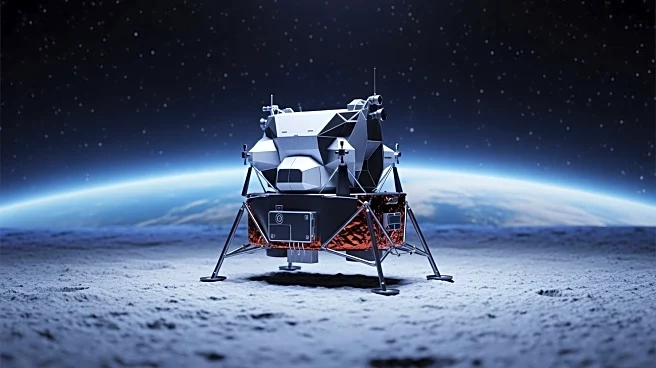
NASA has announced a revised schedule for its Artemis program, which aims to return U.S. astronauts to the Moon. The updated plan includes a new Artemis mission in 2027 and at least one lunar landing per year starting in 2028. The Artemis III mission,
now set for 2027, will focus on validating systems in low Earth orbit, paving the way for a lunar landing on Artemis IV in 2028. The revised plan also involves maintaining a consistent Space Launch System (SLS) and Orion configuration to reduce technical risks. NASA's strategy emphasizes standardizing vehicle configurations and increasing flight rates to achieve its objectives efficiently.
Why It's Important?
The revised Artemis schedule reflects NASA's commitment to sustaining long-term lunar operations and advancing U.S. leadership in space exploration. By increasing mission frequency and standardizing systems, NASA aims to enhance safety and reliability while reducing costs. This approach is crucial for maintaining competitiveness in the global space race, particularly with increasing geopolitical challenges. The Artemis program's success could lead to significant advancements in space technology and exploration, fostering international collaboration and inspiring future generations of scientists and engineers.