
What's Happening?
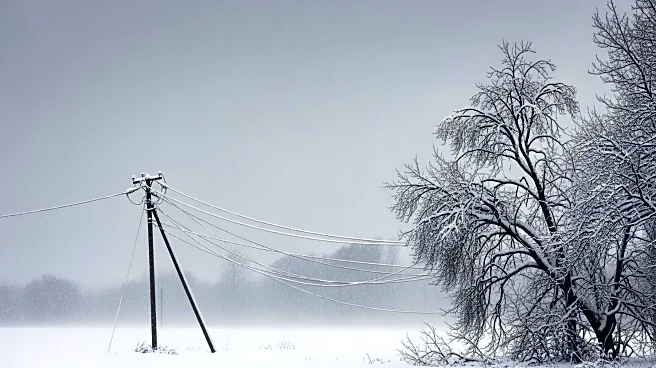
A powerful winter storm has swept across the Upper Midwest, bringing blizzard conditions, dangerous wind chills, and widespread power outages. The storm, which began affecting the region on Sunday, has resulted
in whiteout conditions and travel disruptions, particularly in the northern Plains. The National Weather Service has warned of severe weather, including heavy snow and strong winds, which have made travel nearly impossible in some areas. The storm has been classified as a bomb cyclone due to its rapid intensification as it moved from the Midwest into the Great Lakes region. In Michigan's Upper Peninsula, snowfall has reached up to 24 inches, while parts of New York and New England are experiencing freezing rain, posing risks to power lines and trees. The storm has also caused significant flight delays and cancellations across U.S. airports.
Why It's Important?
The winter storm's impact is significant due to its widespread effects on transportation, power infrastructure, and public safety. With over 350,000 customers experiencing power outages, the storm has disrupted daily life and posed challenges for emergency services. The severe weather conditions have also led to numerous flight delays and cancellations, affecting travel plans during the holiday season. The storm's classification as a bomb cyclone highlights the increasing frequency and intensity of extreme weather events, which can strain resources and infrastructure. Additionally, the storm's impact on the energy grid and transportation networks underscores the need for preparedness and resilience in the face of such natural disasters.
What's Next?
As the storm continues to move eastward, it is expected to intensify, bringing further severe weather to the Great Lakes and Northeast regions. Forecasters predict additional snowfall and high winds, which could exacerbate existing power outages and travel disruptions. In the South, a sharp cold front is anticipated to bring a sudden drop in temperatures, ending a period of record warmth. Authorities and emergency services are likely to remain on high alert, coordinating efforts to restore power and ensure public safety. The ongoing weather conditions may prompt further advisories and warnings as the storm progresses.