
What's Happening?
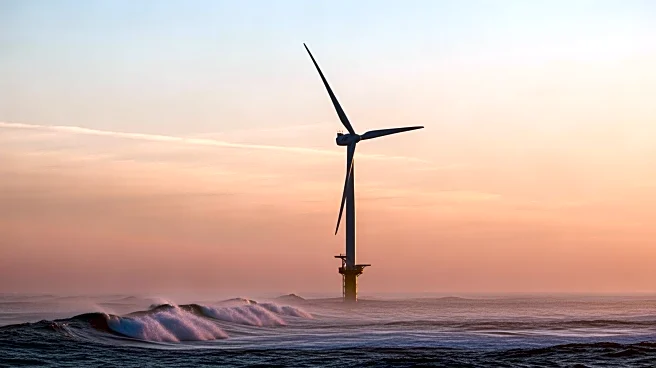
The UK government has awarded a contract for the construction of the Berwick Bank offshore wind farm, set to be one of the largest in the world. Located off the coast of East Lothian, the project will
be developed by SSE and is expected to feature up to 307 turbines, generating enough electricity to power six million homes. The 4.1 gigawatt development is part of the UK's strategy to deliver clean power by 2030, with the first phase expected to produce about 1.4 gigawatts. While the project is seen as a significant step towards energy independence, it has faced opposition from conservation groups due to potential impacts on local seabird populations.
Why It's Important?
The Berwick Bank wind farm represents a major advancement in the UK's renewable energy efforts, potentially reducing reliance on foreign energy sources and stabilizing energy costs. The project is expected to contribute significantly to the UK and Scottish governments' offshore wind targets, supporting the transition to clean energy. However, the environmental impact, particularly on seabird populations, has raised concerns among conservationists. The project highlights the ongoing challenge of balancing renewable energy development with environmental conservation, as efforts to mitigate harm to wildlife are scrutinized.
What's Next?
As the project moves forward, developers will need to address environmental concerns, particularly those related to seabird populations. Measures to mitigate the impact on wildlife will be crucial, and developers may need to demonstrate how they will protect affected species elsewhere in the ecosystem. The project's progress will be closely monitored by both government and environmental groups, with potential adjustments to plans to ensure compliance with environmental standards. The outcome of these efforts could influence future renewable energy projects and their approach to environmental conservation.
Beyond the Headlines
The Berwick Bank project underscores the broader debate over the environmental costs of renewable energy. While the transition to clean energy is essential for combating climate change, it must be balanced with the preservation of biodiversity. The controversy surrounding the project may prompt a reevaluation of how renewable energy projects are planned and executed, potentially leading to more stringent environmental assessments and mitigation strategies. This development could set a precedent for future projects, influencing policy and public perception of renewable energy initiatives.