








What's Happening?
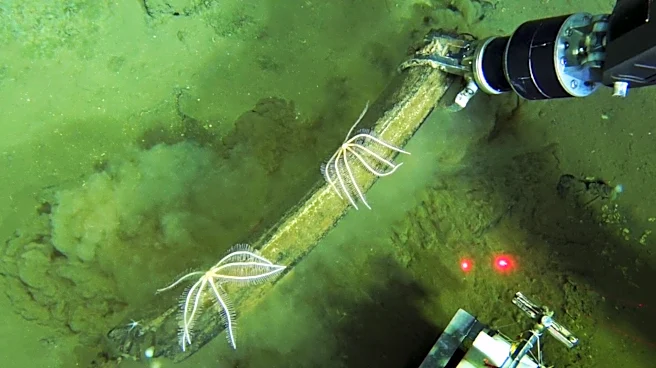
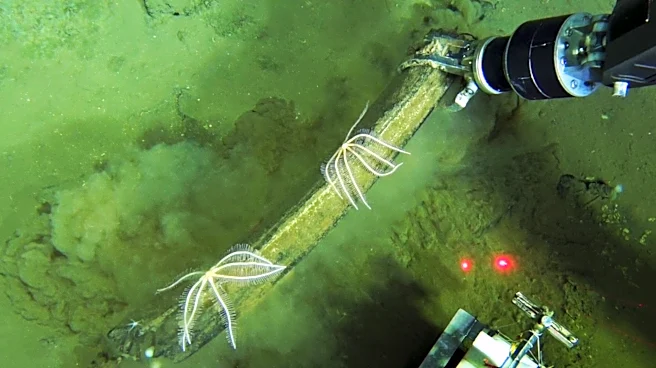
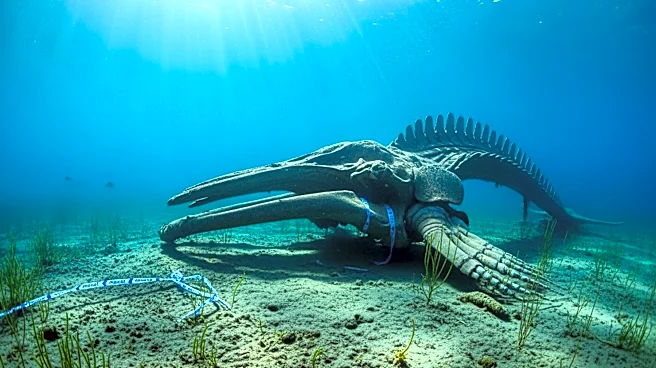
Researchers have discovered the world's deepest and largest known aggregation of whale fossils and active whale-fall ecosystems in the Diamantina Zone of the southeastern Indian Ocean. This 'whale necropolis' contains evidence of cetacean falls for at least
5.3 million years. The study, published in Nature, documents 485 whale fossil sites and five active whale falls at depths ranging from 4,616 to 7,001 meters. The site is believed to contain more than 10 million whale carcasses, representing a significant carbon sink. The findings provide new insights into the evolution and dispersal of deep-sea life and the role of whale falls in long-term carbon sequestration.
Why It's Important?
The discovery of this extensive whale graveyard offers valuable information on the biodiversity and ecological dynamics of deep-sea environments. Whale falls play a crucial role in supporting deep-sea ecosystems by providing a concentrated source of nutrients and habitat for various marine species. The study highlights the importance of whale falls in carbon sequestration, which is vital for understanding global carbon cycles and climate change mitigation. Additionally, the findings may inform conservation efforts by shedding light on the evolutionary history and population dynamics of ancient whales.
What's Next?
Further exploration and research are needed to fully understand the ecological significance of the whale necropolis and its role in deep-sea biodiversity. Scientists aim to study the interactions between whale falls and other deep-sea ecosystems, such as hydrothermal vents and cold seeps. The discovery may also prompt new conservation strategies to protect these unique habitats and the species that depend on them. Continued investigation could lead to the identification of new species and a deeper understanding of deep-sea life.