








What's Happening?
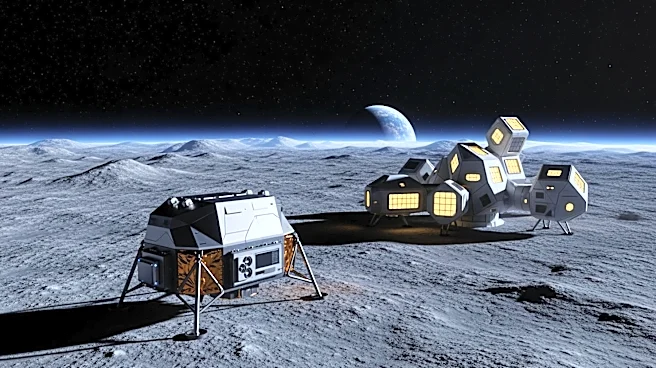
As plans for establishing a sustained human presence on the moon progress, experts are advocating for the development of a lunar building code to ensure the safety and integrity of structures in the moon's unique environment. At the 26th Space Resources
Roundtable, Nerma Caluk, an engineer and lunar specialist, emphasized the need for specific design criteria for lunar habitats, landing pads, and other infrastructure. The moon's reduced gravity poses challenges for structural stability, as traditional seismic design principles may not apply. The American Society of Civil Engineers is working on guidelines to address these challenges, focusing on seismic issues and the unique lunar hazard environment.
Why It's Important?
Developing a lunar building code is crucial for the safe and successful construction of moon bases, which are essential for future space exploration and potential commercial activities. Ensuring structural integrity in the moon's low-gravity environment is vital to prevent catastrophic failures that could endanger human lives and missions. Establishing these guidelines will also facilitate international collaboration and standardization in lunar construction, paving the way for sustainable development on the moon. This initiative highlights the importance of adapting terrestrial engineering knowledge to extraterrestrial environments.
What's Next?
The development of a lunar building code will involve extensive research and collaboration among engineers, scientists, and space agencies. As NASA and other space agencies plan to build lunar habitats, the implementation of these guidelines will be critical. Future missions will likely include geotechnical site investigations to better understand the lunar subsurface and mitigate risks. The success of these efforts will depend on continued investment in lunar exploration and infrastructure development, as well as the ability to adapt to evolving geotechnical and seismic data.