
What's Happening?
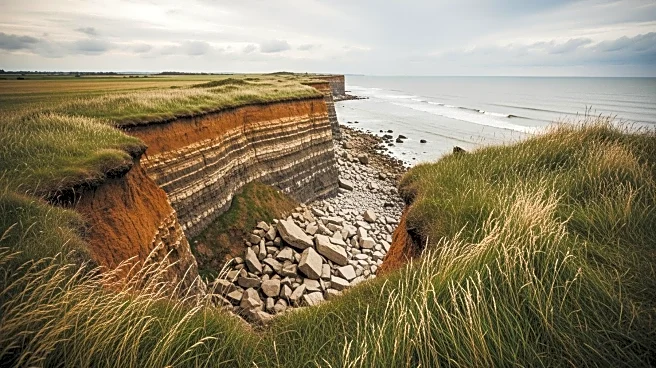
East Yorkshire, known for having one of the fastest eroding coastlines in the UK, has seen numerous towns and villages disappear into the sea over the years. Historical maps from the East Riding Archives
reveal that more than 30 locations have vanished from the East Yorkshire coast over the past 400 years. This erosion has been a persistent issue, with communities like Kilnsea and Withernsea experiencing significant land loss. Residents and local businesses, such as the Crown and Anchor pub in Kilnsea, face challenges from the shifting coastline, including power cuts and infrastructure instability. Despite flood defenses installed in 2013, the threat of erosion remains, exacerbated by climate change and rising sea levels.
Why It's Important?
The erosion of the East Yorkshire coastline poses significant risks to local communities, impacting their livelihoods and infrastructure. As the coastline continues to recede, properties and businesses are at risk of being lost, affecting the local economy and community stability. The situation highlights the broader implications of climate change, as rising sea levels and increased storminess contribute to the erosion. This serves as a warning for other coastal regions facing similar threats, emphasizing the need for effective coastal management and adaptation strategies to protect vulnerable areas.
What's Next?
The Environment Agency has acknowledged the increasing risk of coastal erosion due to climate change and is working on the Changing Coasts East Riding Project. This initiative is part of the UK government's £200 million Flood and Coastal Innovation Programme, aimed at enhancing flood and coastal resilience. The project seeks to support communities in adapting to the changing climate, potentially involving new flood defenses and community engagement to develop sustainable solutions. Continued monitoring and innovative approaches will be crucial in mitigating the impact of erosion on East Yorkshire's coastal communities.
Beyond the Headlines
The erosion of East Yorkshire's coastline not only threatens physical structures but also cultural heritage and local history. Stories of lost villages and the folklore surrounding them, such as the tale of church bells heard from beneath the sea, reflect the deep connection between the community and its landscape. As erosion progresses, preserving these narratives and the region's historical identity becomes increasingly important. Additionally, the situation underscores the ethical responsibility to address climate change impacts, balancing development with environmental conservation.