




What's Happening?
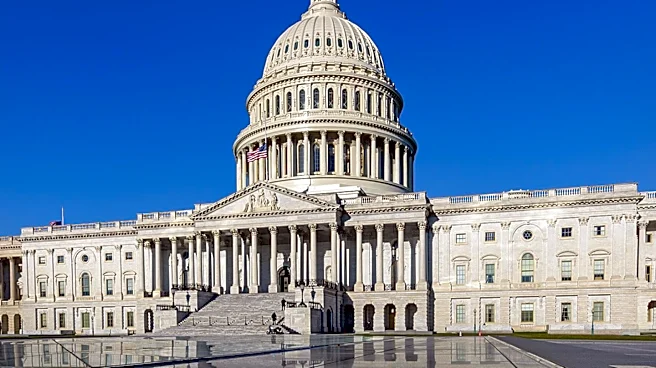
The House Financial Services Committee recently held a hearing titled 'Strengthening The American Economy: Promoting Growth, Opportunity, And Prosperity.' The session focused on various economic issues, including growth, affordability, housing, access
to capital, and financial innovation. Committee Chair J. French Hill (R-AR) highlighted legislative achievements such as the GENIUS Act and the 21st Century ROAD to Housing Act, arguing that regulatory certainty and recent financial legislation would foster investment and economic growth. Conversely, Ranking Member Maxine Waters (D-CA) expressed concerns about affordability and consumer protections, citing rising mortgage rates and high housing costs. The hearing also addressed the declining share of the U.S. dollar in global foreign-exchange reserves, with Circle President Heath Tarbert emphasizing the importance of compliant stablecoins in maintaining dollar dominance as financial infrastructure increasingly moves online. Tarbert advocated for the advancement of the CLARITY Act to support this transition.
Why It's Important?
This hearing underscores the ongoing debate within Congress regarding the direction of U.S. economic policy and financial regulation. The differing perspectives between Republican and Democratic committee members highlight fundamental disagreements on economic conditions and the effectiveness of current legislative efforts. The discussion on stablecoins and digital assets is particularly significant as it touches upon the future of the U.S. dollar's global standing. As financial transactions increasingly shift to digital platforms, the regulatory framework for digital currencies could determine whether the U.S. maintains its financial leadership. The emphasis on housing affordability and access to capital also reflects critical societal challenges that directly impact American households and their economic well-being. The outcomes of these legislative discussions will influence investment, innovation, and the financial stability of various sectors.
What's Next?
The implementation of the GENIUS Act, which established a federal regulatory framework for payment stablecoins, is still underway. Federal regulators missed the July 18 deadline for issuing implementing regulations, with several rulemakings still pending. The law is expected to take effect on January 18, 2027, unless final regulations trigger an earlier date. Meanwhile, the CLARITY Act, a proposed digital asset market structure framework, remains part of the broader congressional debate on digital asset regulation. The House Financial Services Committee is also scheduled to hold a markup on several bills impacting housing for older adults, which will be a crucial step toward bringing this legislation to a vote. These ongoing legislative processes will shape the future of financial innovation, housing policy, and the regulatory environment for digital assets in the U.S.
Beyond the Headlines
The debate surrounding stablecoins and the dollar's global dominance extends beyond immediate financial regulation, touching upon geopolitical implications and national security. Maintaining the dollar's role as the primary global reserve currency is crucial for U.S. economic influence and stability. The rise of digital currencies and the potential for other nations to develop their own central bank digital currencies (CBDCs) could challenge this dominance. The legislative efforts discussed, such as the GENIUS Act and the CLARITY Act, represent attempts to proactively shape this evolving financial landscape rather than react to it. Furthermore, the focus on housing affordability highlights a persistent socio-economic issue that, if unaddressed, could exacerbate wealth inequality and hinder overall economic growth. The interplay between technological advancement in finance and traditional economic concerns like housing underscores the complex challenges policymakers face in a rapidly changing world.