







What's Happening?
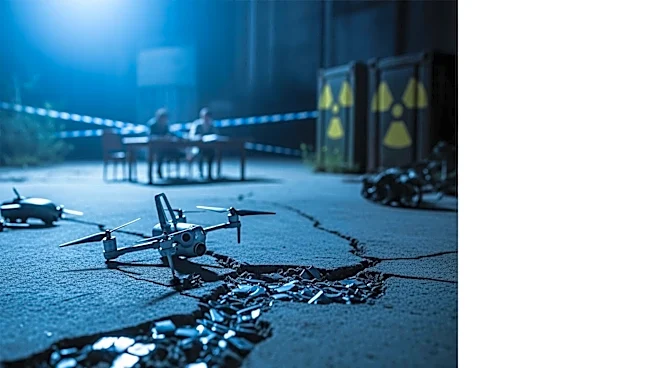
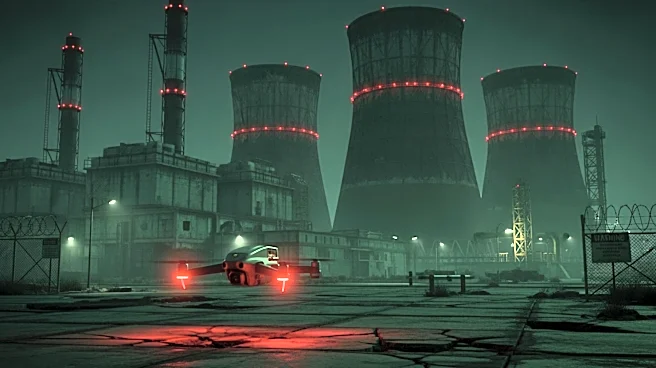
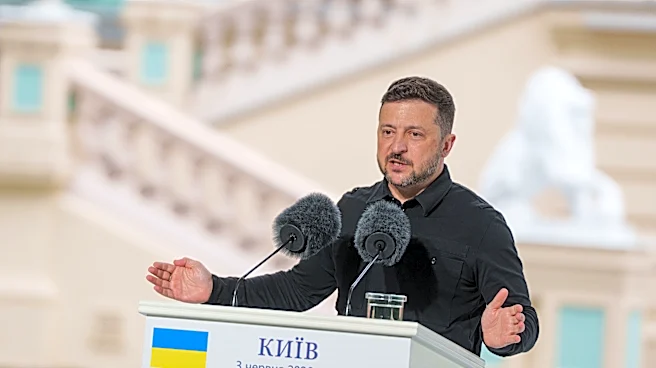
A Russian drone attack targeted a storage facility for spent nuclear fuel near Ukraine's Chornobyl power plant, according to Ukrainian officials. The strike, described as 'extremely vile' by President Volodymyr Zelenskiy, did not result in a radiation
spike, and no injuries were reported. The facility, which was partially destroyed, did not contain any spent fuel at the time of the attack. The International Atomic Energy Agency (IAEA) confirmed that the strike significantly damaged a fuel-reception building close to where large amounts of nuclear material are stored. The fire caused by the attack was extinguished, and the IAEA plans to inspect the site soon.
Why It's Important?
This incident underscores the ongoing tensions and hostilities between Russia and Ukraine, particularly concerning critical infrastructure. The attack on a nuclear facility, even without immediate radiation consequences, raises significant concerns about nuclear safety and the potential for environmental disasters. It highlights the risks associated with military actions near sensitive sites and the broader implications for regional and global security. The international community, especially countries reliant on nuclear energy, may view this as a dangerous escalation, prompting calls for increased diplomatic efforts to prevent further incidents.
What's Next?
The IAEA's planned inspection of the site will be crucial in assessing the full impact of the attack and ensuring that safety protocols are maintained. The international response may include diplomatic pressure on Russia to cease such attacks, particularly those involving nuclear facilities. Ukraine may seek further support from allies to bolster its defenses against drone strikes. Additionally, this incident could lead to renewed discussions on the security of nuclear sites in conflict zones, potentially influencing future international agreements or protocols.