






What's Happening?
Representative Lucy McBath, along with other Democratic members of Georgia's congressional delegation, is urging Governor Brian Kemp to enroll Georgia in the USDA's Summer EBT program. This program provides financial assistance to families with children
during the summer months when school meal programs are unavailable. Despite the program's benefits, Governor Kemp has declined participation for the third consecutive year, making Georgia one of only 12 states not participating. The letter to Governor Kemp is signed by Senators Raphael Warnock and Jon Ossoff, and Representatives Hank Johnson, Sanford Bishop, and Nikema Williams. The Summer EBT program offers $40 per eligible child per month, totaling $120 over the summer, which is crucial for families facing food insecurity. The delegation emphasizes the urgency of participation, especially after recent cuts to Medicaid and SNAP, which have reduced access to school meals.
Why It's Important?
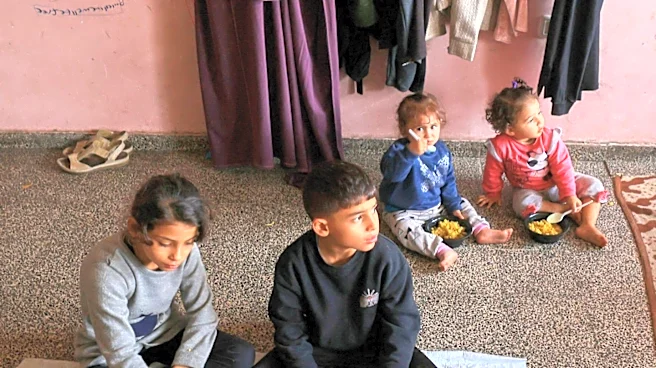
The refusal to participate in the Summer EBT program has significant implications for Georgia's low-income families. With over 40% of Georgia's 2.8 million children qualifying for the program, the lack of participation leaves many families struggling to provide food during the summer. The decision not to join the program exacerbates the challenges faced by families due to rising grocery prices and reduced resources from cuts to Medicaid and SNAP. The Georgia General Assembly had allocated funds to participate in the program, but these were vetoed by Governor Kemp, highlighting a disconnect between state leadership and legislative consensus. Participation in the program could alleviate food insecurity and support working families, aligning with broader efforts to reduce child hunger and improve living conditions for vulnerable populations.
What's Next?
The Georgia Democratic delegation continues to press Governor Kemp to reconsider his stance and enroll Georgia in the Summer EBT program. The urgency of the situation is underscored by the recent legislative efforts to allocate funds for the program, which were vetoed. The delegation is advocating for the Governor to respect the bipartisan consensus of the Georgia General Assembly and submit the necessary materials to participate. If Georgia joins the program, it could set a precedent for other states that have also declined participation, potentially leading to broader adoption of the program nationwide. The outcome of this advocacy will impact the state's approach to addressing child hunger and supporting low-income families.