




What's Happening?
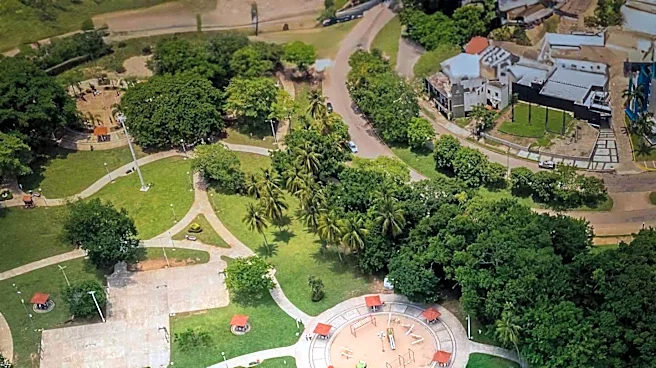
Smith Park, located in downtown Jackson, Mississippi, maintains its status as one of America's oldest continuously used antebellum city parks. Established in 1838 by the Legislature as a commons for the city's health, ornament, and convenience, the park spans
2.35 acres near Amite Street, just north of the Governor's Mansion. It is the sole surviving undeveloped block from the 1822 city plan. The park is listed on the National Register of Historic Places and was designated a Mississippi Landmark in 2017. It features several monuments, including the W.J. Davis Monument (1918) and the Rob Morris Monument (1934). Named after James Smith, a Scottish businessman who funded a fence around the park in 1884, Smith Park today offers open green space with rolling hills, mature shade trees, paved paths, benches, a covered pavilion, and a semi-covered platform stage. It also hosts the Fertile Ground Project, an art installation. The park has undergone multiple renovations, including a mid-1970s update that added an amphitheater and an artificial stream, and a later multi-phase restoration by Downtown Jackson Partners and the City of Jackson to re-sod the grounds and remove deteriorating elements.
Why It's Important?
Smith Park's enduring presence is significant for Jackson, Mississippi, as it represents a continuous link to the city's early planning and development. Its designation as a National Register of Historic Places site and a Mississippi Landmark underscores its historical and cultural value, preserving a piece of antebellum urban design. The park serves as a vital community space, hosting concerts, arts and crafts events, festivals, food trucks, fitness activities, picnics, and private gatherings. This continuous use highlights its role in fostering community engagement and providing accessible green space in an urban environment. The ongoing maintenance and past renovations, supported by entities like Downtown Jackson Partners and the City of Jackson, demonstrate a commitment to preserving historical assets while adapting them for contemporary use. The park's ability to attract diverse activities contributes to the local economy by drawing visitors and supporting local vendors, while also enhancing the quality of life for residents by offering recreational and cultural opportunities.
What's Next?
Smith Park is expected to continue its role as a central venue for community events and gatherings in Jackson, Mississippi. The stage within the park is regularly utilized for concerts, arts and crafts, and cultural events, indicating a sustained schedule of public programming. The park also remains available for rent through the City of Jackson's Parks and Recreation Department for private events such as parties and reunions. Future activities will likely include ongoing festivals, food truck appearances, and fitness activities, maintaining its status as a dynamic public space. While there is no on-site parking, visitors are advised to plan ahead, suggesting that the park's accessibility and popularity will continue to draw crowds. The presence of the Fertile Ground Project, an art installation, suggests a continued integration of cultural elements within the park's offerings.
Beyond the Headlines
The longevity of Smith Park, as one of the oldest continuously used antebellum city parks in America, offers a deeper insight into urban planning and the evolution of public spaces in the United States. Its survival as the only undeveloped block from Jackson's 1822 city plan highlights the historical foresight in preserving green spaces within urban development. The park's multiple renovations reflect changing societal needs and aesthetic preferences over nearly two centuries, from the addition of an amphitheater in the 1970s to more recent re-sodding efforts. This continuous adaptation underscores the challenge and importance of balancing historical preservation with modern utility. Furthermore, the park's role as a venue for diverse community activities, from cultural events to private gatherings, illustrates its function as a social anchor, fostering community cohesion and providing a shared public commons in an increasingly privatized world. The ongoing commitment to its maintenance and programming speaks to a broader understanding of the value of accessible green spaces for urban well-being and cultural enrichment.