

What's Happening?
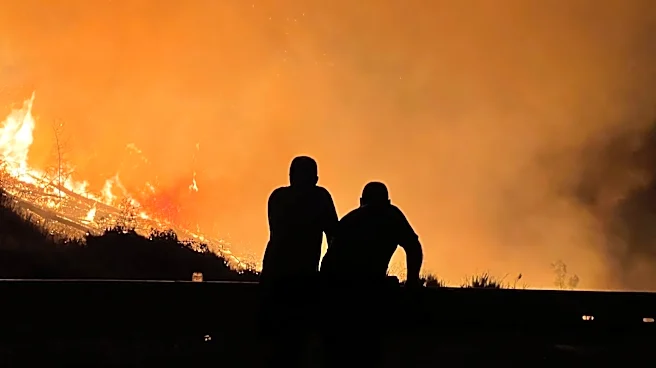
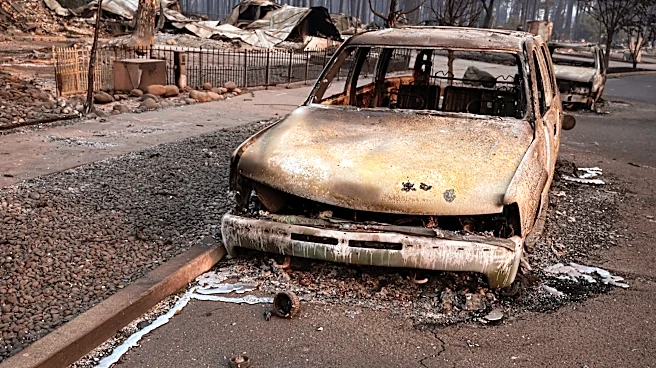
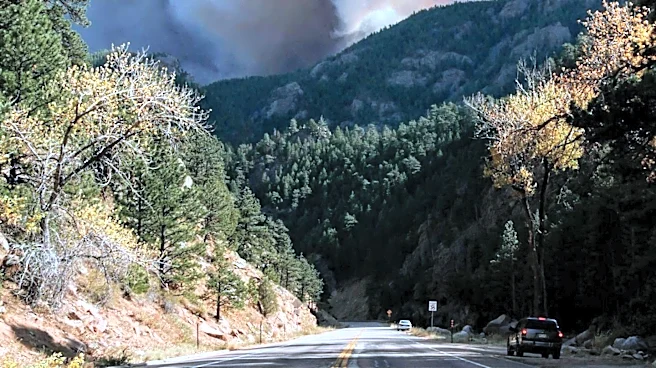
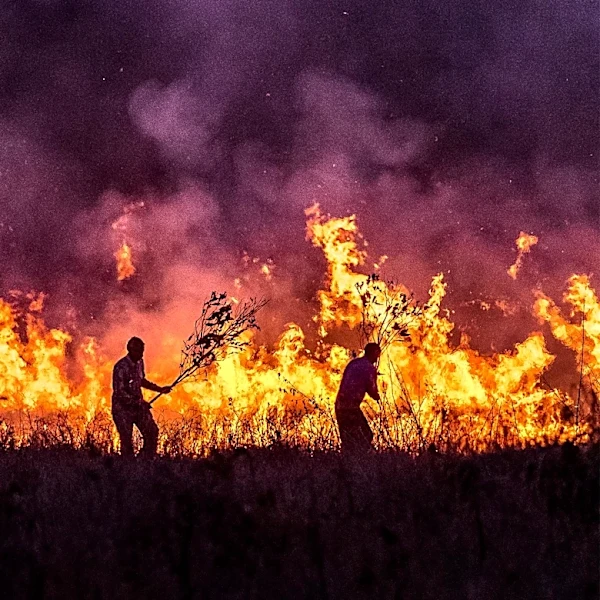
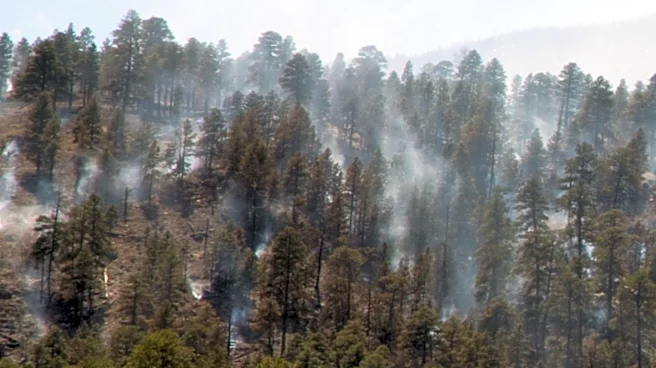
The Pacific Northwest is experiencing a historic wildfire season, with over 2.9 million acres burned across Washington and Oregon. The fires have been fueled by extreme weather conditions, including dry winds and lightning, leading to the destruction
of at least 846 structures in Washington alone. The National Interagency Fire Center reports that more than 6.3 million acres have burned across the US this year, with 95 large blazes currently active. The fires have been exacerbated by climate change, which has extended the fire season and increased temperatures. The Old Trails fire near Spokane, Washington, is one of the most significant, with suspicions of arson leading to an arrest.
Why It's Important?
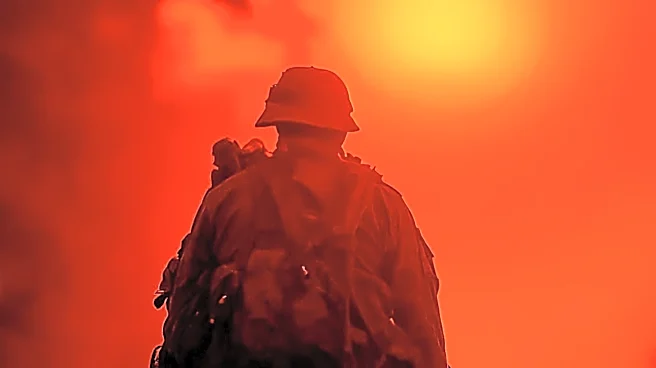
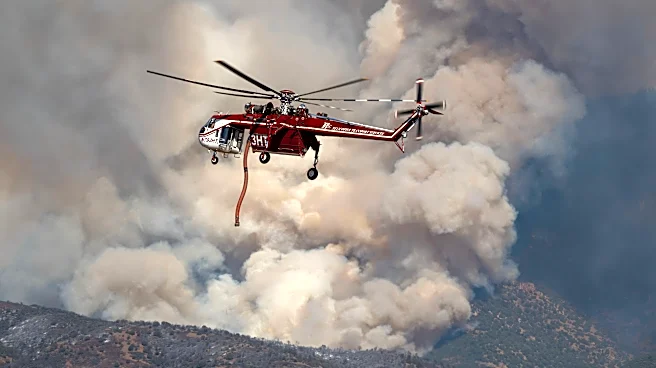
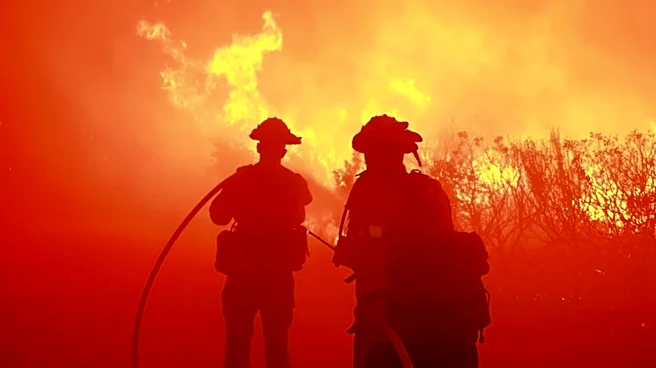
The ongoing wildfires highlight the increasing threat posed by climate change, as rising temperatures and prolonged dry seasons create conditions ripe for such disasters. The fires have significant implications for public health, as they produce toxic smoke that affects air quality. The economic impact is also substantial, with the destruction of homes and infrastructure leading to costly rebuilding efforts. The strain on firefighting resources is immense, with crews spread thin across multiple regions. This situation underscores the urgent need for climate action and improved fire management strategies to mitigate future risks.
What's Next?
The fire season is expected to continue into the fall, with the potential for more destructive fires as conditions remain dry. The El Niño weather pattern could further exacerbate the situation by bringing warmer and drier conditions to the Pacific Northwest. Firefighting efforts will continue to be challenged by resource limitations, and there may be increased calls for federal assistance and policy changes to address the root causes of these fires. Communities in affected areas will need to focus on recovery and rebuilding, while also preparing for the possibility of future fires.