






What's Happening?
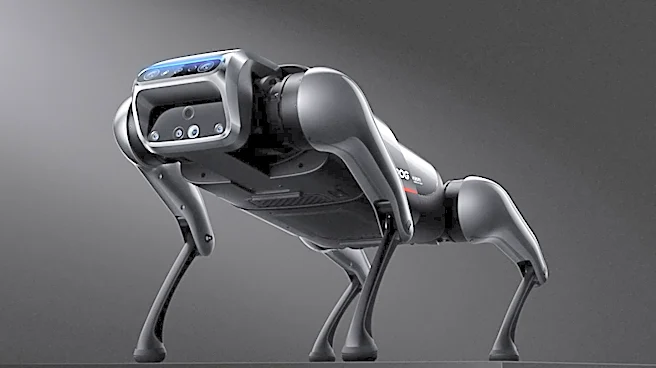
China's Unitree Robotics, a major producer of humanoid and quadruped robots, developed designs for its successful robot dogs based on innovations initially funded by the U.S. military. According to a former U.S. defense technology official and three top
researchers involved in the original project, Unitree's popular Go2 model, launched in 2023, rapidly dominated the global quadruped robot market. These Chinese robots draw on breakthroughs in quadruped movement financed by the U.S. DEVCOM Army Research Laboratory (ARL) and other military programs. Ben Katz, a researcher involved in the U.S. project, noted that the dimensions of Unitree's Go series are almost identical to the groundbreaking Mini Cheetah robot he helped develop. While Unitree did not act underhandedly, as the research findings were openly published to stimulate progress, this situation highlights a broader issue: the U.S.'s struggle to commercialize its own high-tech innovations at scale compared to China's state-directed manufacturing sector. The Pentagon recently added Unitree to a list of Chinese military companies, limiting future U.S. military use of its technology, although Unitree maintains its products are for civilian use.
Why It's Important?
This development is critically important for U.S. national security and economic competitiveness. It exposes a significant vulnerability in the U.S. innovation ecosystem, where foundational research funded by American taxpayers and military programs can be rapidly commercialized and scaled by foreign adversaries, particularly China. This dynamic allows China to gain a competitive edge in strategic industries like robotics, which have dual-use applications for both civilian and military purposes. The fact that Unitree's robots have been shown armed and accompanying People's Liberation Army (PLA) troops underscores the direct national security implications. The U.S. excels in innovation but often lags in scaling production, a gap that China's industrial policy effectively exploits through subsidies, component clusters, and a tolerance for losses. This imbalance threatens to erode U.S. leadership in critical technologies and could make the U.S. military reliant on foreign-sourced components or systems, creating supply chain risks. The situation also highlights the challenge of balancing open scientific research with national security interests, as publicly available research can be leveraged by competitors.
What's Next?
U.S. policymakers are urged to focus on enabling American companies to quickly commercialize technological advances to compete with China. While the Federal Communications Commission (FCC) has banned imports of future models of foreign-made humanoid and quadruped robots, including those from Unitree, experts believe this is insufficient to build a competitive domestic industry. The focus will likely shift towards strengthening the U.S. industrial base, ensuring access to capital, and developing a highly skilled workforce and robust parts supply chains to scale up breakthroughs. Companies like Ghost Robotics, which commercialized U.S. breakthroughs, are actively seeking to diversify their supply chains away from China, exploring production in allied countries like Taiwan. This suggests a push for closer collaboration with allies to secure critical supplies and manufacturing capacity. The ongoing competition between private U.S. companies and China's coordinated national strategy will necessitate a comprehensive approach from the U.S. government, potentially involving more targeted industrial policies and investments to foster domestic production and innovation in robotics and other strategic high-tech sectors.
Beyond the Headlines
The case of Chinese robot dogs leveraging U.S.-funded research reveals a deeper systemic challenge for the U.S. in the global technology race. It highlights the tension between the traditional American model of open scientific inquiry and the state-backed industrial policies of countries like China. While open publication fosters global scientific advancement, it also creates pathways for competitors to rapidly adopt and weaponize innovations without bearing the initial research and development costs. This raises ethical questions about the responsible dissemination of potentially dual-use technologies and the need for a more nuanced approach to intellectual property in critical sectors. Furthermore, the incident underscores the broader implications of China's 'Made in China 2025' initiative, which aims for global leadership in key industries. The U.S. failure to commercialize its own research effectively can lead to a 'dropped ball' scenario, where venture capital's preference for high-return software startups overlooks the long-term strategic importance of hardware manufacturing. This could trigger a re-evaluation of U.S. industrial policy, potentially moving towards more direct government support and incentives for domestic manufacturing in strategic areas to counter foreign state-backed competition and secure national technological sovereignty.