







What's Happening?
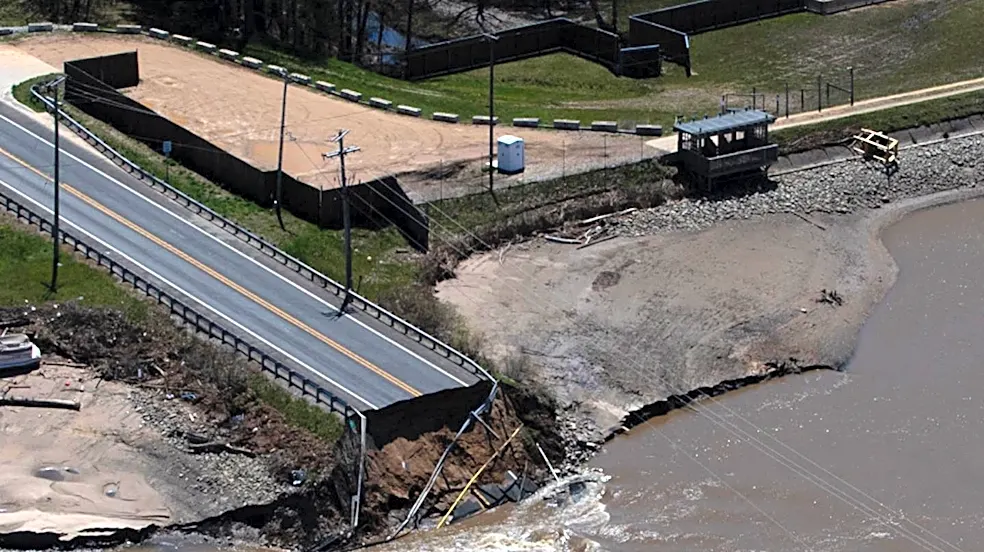
A significant water main break has occurred in Johnston County, Oklahoma, leaving numerous residents without water service. The rupture has affected areas including Cinnamon, Ginger, Sugar, Ray Branum, Industrial Road, Pennington Road, and regions west
of the Pennington Creek bridge. Emergency services staff in Johnston County are actively working on repairs, though a definitive timeline for service restoration remains unknown. Pennington Creek, historically the primary water source for Tishomingo, is fed by the Arbuckle-Simpson Aquifer. This incident highlights ongoing challenges with aging water infrastructure in the region. The break comes amidst a multi-year initiative to upgrade Tishomingo's water and wastewater systems, with significant funding already allocated, including a $1.5 million loan with full principal forgiveness from the Oklahoma Water Resources Board and $12.3 million for wastewater improvements. A previous storm had damaged a pump at Pennington Creek, necessitating a backup system.
Why It's Important?
This water main break underscores the critical vulnerability of essential infrastructure in rural U.S. counties. For Johnston County, home to approximately 10,448 residents, and its county seat Tishomingo, disruptions to the water supply can have immediate and severe impacts on daily life, public health, and local commerce. The reliance on Pennington Creek as a historical primary water source means any system failure disproportionately affects the community. The incident also highlights the broader national issue of aging infrastructure, which often requires substantial investment to prevent such occurrences. The ongoing efforts to upgrade Tishomingo's water and wastewater systems, supported by state funding, demonstrate a recognition of this problem and an attempt to mitigate future risks. However, the current break indicates that these upgrades are still in progress and that communities remain susceptible to infrastructure failures in the interim.
What's Next?
Crews are continuing their efforts to repair the water main break in Johnston County, with the immediate focus on restoring service to affected residents. The Oklahoma Department of Environmental Quality's guidance mandates precautionary boil-water notices following such breaks or when system pressure drops below 20 psi, to prevent the spread of waterborne illnesses. Residents in affected areas will likely be advised to boil tap water or use bottled water until the system is fully restored and deemed safe. The incident may also accelerate the ongoing multi-year push to upgrade Tishomingo's water and wastewater systems, potentially leading to a re-evaluation of project timelines or an increase in allocated resources. Officials will need to communicate transparently with the public regarding repair progress, water safety, and any long-term plans to prevent similar future disruptions.
Beyond the Headlines
The water main break in Johnston County, while a localized event, reflects a pervasive challenge across many rural communities in the United States: the struggle to maintain and modernize aging infrastructure with limited resources. The historical reliance on a single source like Pennington Creek, coupled with past drought-related shortages, illustrates the compounding vulnerabilities faced by such areas. The financial assistance from the Oklahoma Water Resources Board and the joint economic study by East Central University's Oka' Institute and the Chickasaw Nation highlight a collaborative approach to addressing these systemic issues. This incident could serve as a case study for other rural counties grappling with similar infrastructure deficits, emphasizing the need for proactive investment, robust backup systems, and comprehensive emergency response plans to ensure public health and economic stability.