
What's Happening?
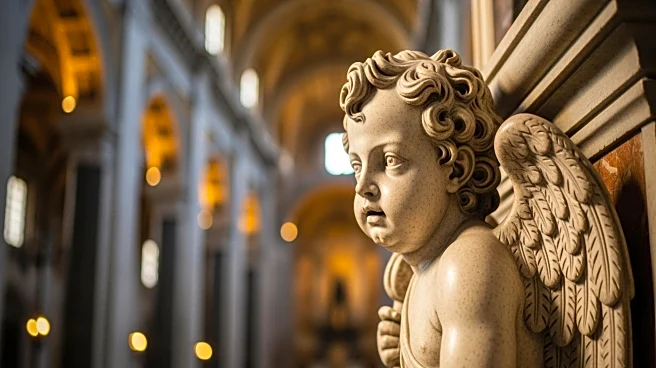
In Rome, a cherub in the Basilica of San Lorenzo in Lucina has sparked controversy due to its resemblance to Italian Premier Giorgia Meloni. The diocese of Rome and the Italian Culture Ministry have launched
investigations into the basilica's recent renovations after images of the cherub were published in Italian newspapers. The cherub, part of a decoration that includes a bust of Italy's last king, Umberto II, appears to be kneeling in deference, which is problematic given Italy's historical rejection of the monarchy post-World War II. The basilica, consecrated in 440 and located near the Spanish Steps, has become a focal point for curiosity-seekers, disrupting church services. Premier Meloni has downplayed the incident, humorously denying any angelic resemblance. The parish priest, Rev. Daniele Micheletti, acknowledged the likeness but dismissed its significance, citing historical precedents of artists using real people as models in religious art.
Why It's Important?
The incident highlights the sensitive intersection of art, politics, and religion in Italy. The resemblance of the cherub to Premier Meloni, a figure associated with a right-wing party with roots in neo-fascism, raises questions about the use of religious art for political symbolism. The investigations by the diocese and the Culture Ministry underscore the importance of maintaining the sanctity and intended purpose of religious imagery. This controversy also reflects broader societal tensions regarding Italy's historical and political narratives, particularly concerning the monarchy and its association with fascism. The outcome of these investigations could influence how religious and cultural heritage sites are managed and interpreted in Italy.
What's Next?
The investigations by the diocese of Rome and the Italian Culture Ministry will seek to determine the original appearance of the cherub from 2000 and assess any deviations during the recent restoration. The Culture Ministry has dispatched officials to evaluate the artwork and decide on further actions. The findings could lead to changes in how religious art is restored and displayed, potentially setting precedents for future restorations. The response from the church and state may also prompt discussions on the role of contemporary figures in religious art and the boundaries between artistic expression and political influence.
Beyond the Headlines
This incident raises broader questions about the role of religious art in contemporary society and its potential to reflect or influence political ideologies. The use of a political figure's likeness in a religious context can blur the lines between sacred and secular, challenging traditional views on the purpose of religious imagery. The controversy also highlights the ongoing dialogue in Italy about its historical identity and the legacy of fascism, monarchy, and their modern-day implications. As Italy navigates these complex issues, the case of the Meloni-like cherub may serve as a catalyst for broader cultural and political discourse.