







What's Happening?
A Learjet believed to be carrying nine individuals crashed on Sunday afternoon in Palm Beach County, Florida. According to the Federal Aviation Administration (FAA), the 22-year-old twin-engine Learjet 60 experienced a rapid descent, dropping approximately
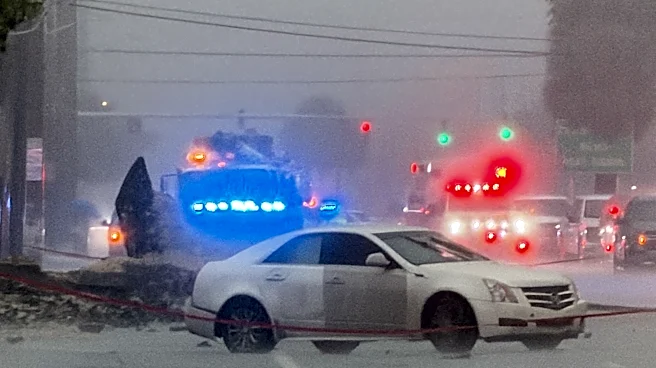
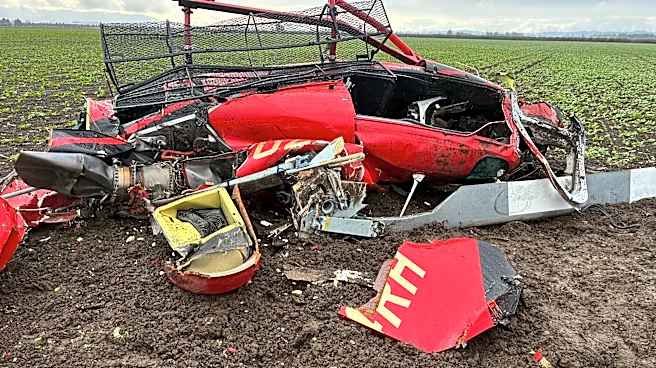
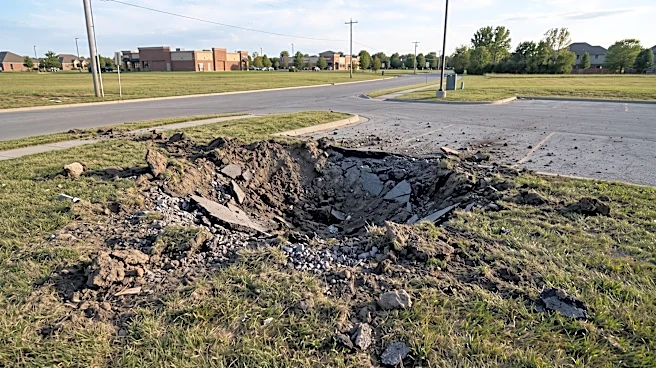
350 feet per second, from an altitude of 35,250 feet to 8,750 feet in just over a minute before impact. The aircraft had departed from Austin, Texas, and was en route to North Eleuthera in the Bahamas. The crash occurred near Military Trail, between Cresthaven Boulevard and 10th Avenue, in the Greenacres community, leaving a crater near a shopping center. Photos and videos from the scene depict the jet hitting the ground nose-first and erupting into a fireball. Florida Governor Ron DeSantis commented on the incident, suggesting that the manner of descent indicated a significant problem occurred in the air. There has been no immediate official word regarding fatalities or injuries. Both the FAA and the National Transportation Safety Board (NTSB) will be investigating the crash. Records indicate the plane belongs to a private company and has been used as a rental.
Why It's Important?
This Learjet crash is a significant aviation incident due to the potential loss of life and the circumstances surrounding its rapid descent. The involvement of a private aircraft used for rental purposes raises questions about maintenance protocols, operational procedures, and pilot qualifications, which will be central to the FAA and NTSB investigations. The crash site's proximity to a shopping center in a residential area in Palm Beach County highlights the potential for broader public safety risks, although initial reports do not indicate ground casualties. The governor's statement about a 'big problem' in the air suggests a critical in-flight emergency, which investigators will work to identify, whether it was mechanical failure, pilot incapacitation, or another catastrophic event. The findings from this investigation could lead to changes in aviation safety regulations, particularly for private and rental jet operations, impacting the broader aviation industry and potentially enhancing safety measures for similar aircraft. The incident also underscores the inherent risks associated with air travel, even with modern safety standards.
What's Next?
The immediate next steps involve the ongoing investigation by the FAA and NTSB. These agencies will meticulously examine the crash site, retrieve the flight data recorder and cockpit voice recorder (if available), analyze air traffic control communications, and review maintenance records and pilot credentials. The primary goal will be to determine the cause of the rapid descent and subsequent crash. Authorities will also work to confirm the number of occupants and any casualties. As the investigation progresses, preliminary findings may be released, providing initial insights into the incident. Depending on the findings, the NTSB may issue safety recommendations to prevent similar occurrences in the future. These recommendations could impact aircraft manufacturers, maintenance organizations, and flight operators. The process of investigation and reporting can take several months to over a year, with a final report detailing the probable cause and contributing factors.
Beyond the Headlines
Beyond the immediate investigation, this incident could spark broader discussions about the oversight and regulation of private and rental jet operations. While commercial aviation is heavily regulated, the private sector sometimes operates under different sets of rules, which could be scrutinized in light of such an event. The use of the aircraft as a rental also brings into focus the responsibilities of aircraft owners and operators in ensuring the airworthiness and safe operation of their planes. Ethically, the incident prompts reflection on the balance between privacy in private air travel and the public's right to safety and transparency in aviation. Legally, depending on the cause, there could be significant implications for liability, insurance claims, and potential lawsuits. Culturally, such crashes often lead to renewed public anxiety about air travel, even though aviation remains one of the safest modes of transportation. The long-term impact could include enhanced safety protocols across the private aviation sector, potentially influencing how such aircraft are maintained, operated, and rented in the future.