




What's Happening?
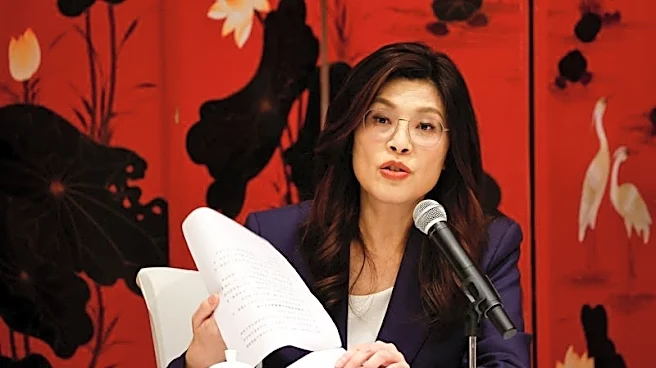
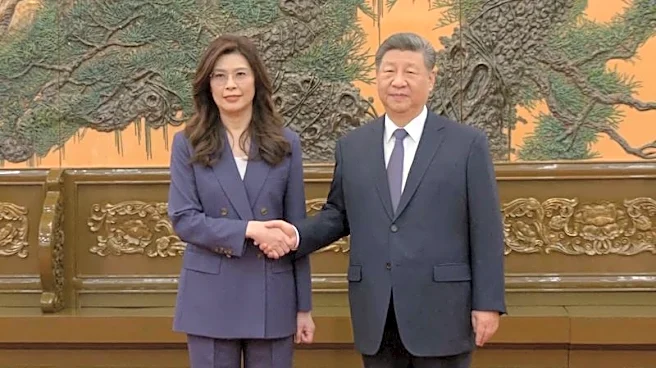
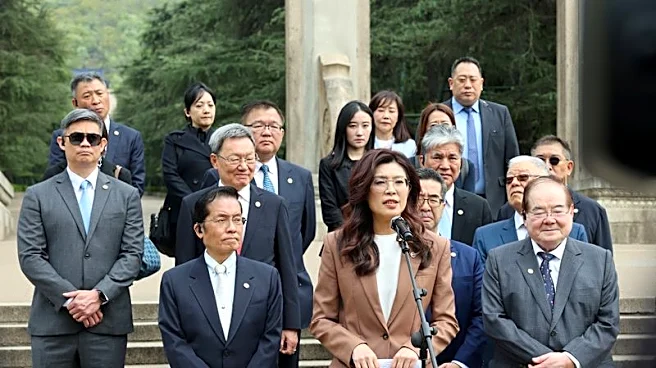
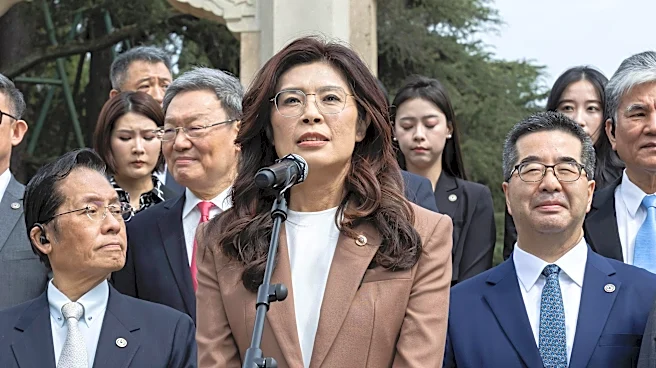
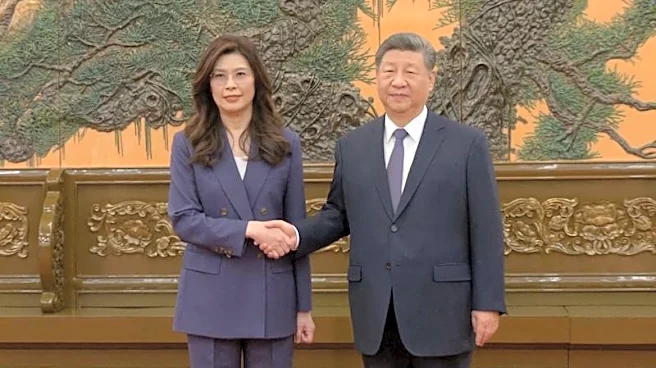
China has introduced a series of incentives aimed at Taiwan, following a visit by Cheng Li-wun, the chairwoman of Taiwan's largest opposition party, the Kuomintang (KMT). The measures include easing tourist restrictions, allowing certain Taiwanese television
content, and facilitating food sales. This development comes after Cheng's meeting with Chinese President Xi Jinping, where they discussed peace and reconciliation. The incentives also propose establishing a regular communication mechanism between the KMT and China's Communist Party, and easing inspection standards for food and fishery products. However, these measures are contingent on Taiwan's opposition to independence, a stance that Beijing maintains firmly.
Why It's Important?
The announcement signifies China's strategic approach to influence Taiwan through economic and cultural incentives, potentially impacting cross-strait relations. By offering these incentives, China aims to strengthen ties with Taiwan's opposition party, possibly undermining the current Taiwanese government's stance on independence. This move could affect Taiwan's internal politics and its international relations, especially with countries that support its sovereignty. The incentives might also impact Taiwan's economy, particularly in sectors like tourism and agriculture, by increasing cross-strait exchanges.
What's Next?
The Taiwanese government has expressed skepticism, viewing China's offers as politically motivated. The Mainland Affairs Council of Taiwan has stated that exchanges should not be subject to political preconditions. The KMT, however, has welcomed the incentives as beneficial to the Taiwanese people. The unfolding dynamics could lead to increased political discourse within Taiwan regarding its relationship with China. Observers will be watching for any shifts in Taiwan's policy or public opinion in response to these developments.