



What's Happening?
Dr. Parvinder Singh Gahlaut, Managing Director of Indian Potash Limited, is spearheading efforts to transform Indian agriculture through Climate Smart Agriculture (CSA) and Artificial Intelligence (AI). These initiatives aim to address the challenges
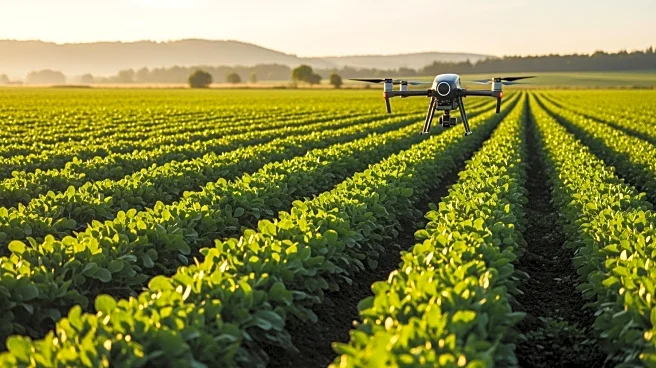
posed by climate change and hazardous chemicals in farming. CSA emphasizes climate-resilient crop management, encouraging farmers to adopt drought-tolerant and pest-resistant varieties. AI-driven tools help farmers analyze weather patterns and soil profiles to optimize farming practices. The IPL Farmer Samvad app provides farmers with data on market trends and weather predictions, supporting informed decision-making.
Why It's Important?
The integration of AI and CSA in Indian agriculture is crucial for enhancing productivity and sustainability. By adopting these innovative practices, farmers can reduce chemical use, conserve resources, and improve resilience to climate variability. This transformation is vital for ensuring food security and protecting the environment. The initiatives led by Indian Potash Limited demonstrate a commitment to supporting farmers and aligning agricultural practices with global climate goals. The use of technology in agriculture not only boosts productivity but also contributes to economic resilience and environmental health.
What's Next?
Indian Potash Limited plans to expand access to AI solutions and digital advisory systems to over 15 million farmers by 2030. The organization is also working on developing drought-resilient fertilizers and regenerative farming models. These efforts aim to further enhance the sustainability of Indian agriculture and support the country's climate goals. The focus on capacity building and farmer training will be essential for scaling these practices effectively and ensuring long-term success.
Beyond the Headlines
The adoption of AI and CSA in agriculture could lead to significant shifts in farming practices and rural economies. By empowering farmers with technology, these initiatives may foster greater collaboration and innovation in the agricultural sector. The emphasis on sustainability and resource conservation aligns with broader environmental and economic objectives, potentially influencing policy and investment decisions in the future.