



What's Happening?
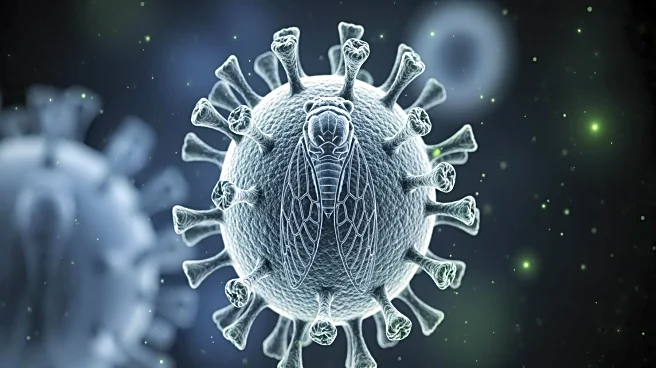
A new COVID-19 variant, known as the 'cicada' variant or BA 3.2, has been identified in at least 25 U.S. states. Initially detected in South Africa in November 2024, the variant began spreading in the United States by September 2025. The Centers for Disease
Control and Prevention (CDC) reports that the variant has been found in various samples, including nasal swabs from travelers and wastewater samples. The 'cicada' variant is noted for its potential to evade antibodies from previous infections or vaccinations, making it highly transmissible. Despite its spread, experts like Dr. Robert H. Hopkins Jr. indicate that the variant does not appear to be more severe than other circulating strains, with symptoms including sore throat, runny nose, and fatigue.
Why It's Important?
The emergence of the 'cicada' variant underscores the ongoing challenges in managing COVID-19, particularly in terms of vaccine efficacy and public health preparedness. The variant's ability to evade immunity could lead to increased COVID-19 activity, potentially straining healthcare systems and impacting public health policies. The CDC emphasizes the importance of robust surveillance to guide preparedness and inform vaccine updates. This development highlights the need for continued vigilance and adaptation in public health strategies to address evolving viral threats.
What's Next?
The CDC will likely continue to monitor the spread of the 'cicada' variant and assess its impact on public health. This may involve updating vaccine formulations to enhance protection against new variants. Public health officials may also consider reinforcing preventive measures, such as mask mandates or travel restrictions, depending on the variant's spread and severity. Ongoing research will be crucial to understanding the variant's characteristics and informing future public health responses.