



What's Happening?
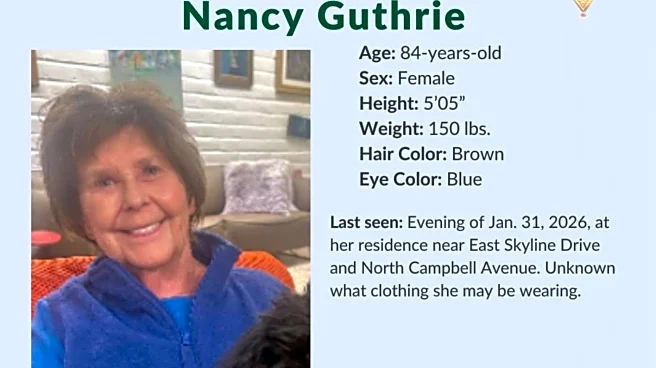
Savannah Guthrie has made a public plea for the safe return of her 84-year-old mother, Nancy Guthrie, who was kidnapped from her home in Tucson, Arizona. In her appeal, Savannah addressed the challenges posed by AI and deepfake technology, which complicate
the verification of 'proof of life' in kidnapping cases. The FBI has warned that criminals can use AI to create realistic fake images and videos, making it difficult to trust visual evidence. The case has attracted significant media attention, with ransom notes reportedly received by news organizations and a California man charged with attempting to extort the family.
Why It's Important?
This case underscores the growing challenges law enforcement faces in the digital age, where AI and deepfake technologies can be exploited by criminals. The ability to create convincing fake images and videos complicates the process of verifying the safety of kidnapping victims, potentially hindering rescue efforts. The situation also highlights the need for updated investigative techniques and public awareness about the potential misuse of AI. The Guthrie family's ordeal has brought national attention to these issues, prompting discussions about the ethical and legal implications of AI in criminal activities.
What's Next?
The FBI and local law enforcement will continue their investigation into Nancy Guthrie's disappearance, focusing on identifying suspects and verifying the authenticity of any evidence received. The case may prompt further discussions among policymakers and technology experts about regulating AI and deepfake technologies to prevent misuse. Public awareness campaigns could be launched to educate people about the risks associated with these technologies. The outcome of this case could influence future law enforcement strategies and legislative measures related to AI and digital evidence.