







What's Happening?
Researchers at UC San Francisco have developed a new form of deep brain stimulation (DBS) that adjusts in real time to improve gait and reduce falls in people with Parkinson's disease. This adaptive DBS (aDBS) system synchronizes stimulation to the gait phase,
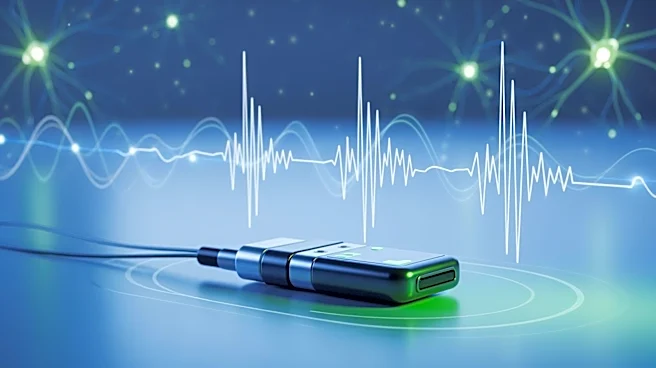
responding to the brain's rhythm of walking. The study, published in Nature Medicine, involved a randomized crossover study of five patients with Parkinson's disease. The results demonstrated that the aDBS system is feasible and safe, reducing falls compared to continuous stimulation. The system operates like a cardiac pacemaker, detecting neural signals associated with each step and automatically adjusting stimulation within fractions of a second. This development addresses the limitations of traditional DBS, which often fails to adequately treat gait impairment, a major source of disability in Parkinson's patients.
Why It's Important?
The development of this adaptive DBS system is significant as it offers a potential solution to one of the most disabling symptoms of Parkinson's disease—gait impairment. Traditional DBS has been effective in treating tremors and stiffness but has limited impact on walking difficulties. By providing real-time adjustments to brain stimulation, the aDBS system could significantly improve the quality of life for Parkinson's patients, reducing their risk of falls and increasing their independence. This innovation represents a shift towards more personalized and responsive neuromodulation therapies, which could extend beyond Parkinson's to other neurological conditions. The success of this study could pave the way for larger clinical trials and eventual widespread adoption of this technology.
What's Next?
Following the promising results of this initial study, further research is needed to validate the efficacy and safety of the adaptive DBS system in larger patient populations. Future studies will likely focus on refining the technology and exploring its application to other symptoms and conditions. The medical community may initiate multi-center clinical trials to gain regulatory approval, a process that could take several years. If successful, this technology could transform the treatment landscape for Parkinson's disease and potentially other neurological disorders, offering a new standard of care that adapts to the dynamic needs of patients.
Beyond the Headlines
The adaptive DBS system developed by UCSF represents a paradigm shift in how brain stimulation therapies are conceptualized and implemented. By tying neural stimulation directly to active behavior, this approach challenges the traditional model of static, continuous stimulation. This innovation could lead to broader applications in personalized medicine, where therapies are tailored to the real-time needs of patients. The success of this technology could inspire further research into adaptive neurotherapies for other conditions, such as speech disorders and cognitive decline, potentially revolutionizing the field of neuromodulation.