







What's Happening?
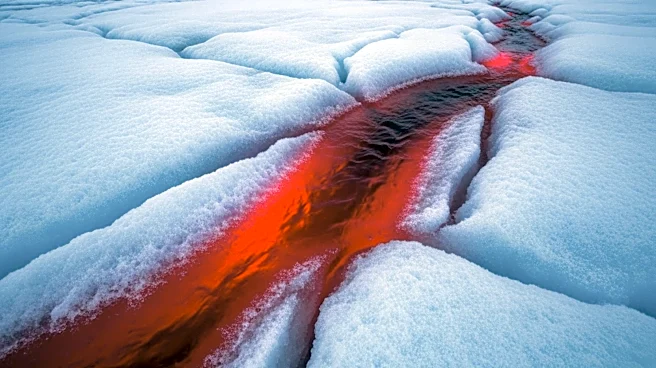
Scientists have uncovered the cause behind the mysterious Blood Falls in Antarctica, a phenomenon characterized by the striking red outflow of iron-rich water. The study, led by geoscientist Peter T. Doran and published in Antarctic Science, attributes
the phenomenon to pressure shifts beneath the glacier. Blood Falls, located on Taylor Glacier in Antarctica's McMurdo Dry Valleys, has intrigued researchers since its discovery in 1911 due to its blood-like appearance. The new research connects the bursts of red water to pressure fluctuations beneath the glacier's surface, revealing significant subterranean changes. The red discharge originates from subglacial channels where hypersaline brine has been trapped for millions of years. As the glacier shifts, pressure builds up within these channels, leading to the dramatic flows observed at the glacier's edge.
Why It's Important?
This discovery is significant as it reshapes the understanding of Antarctic glaciology and the complex interactions between ice, water, and subterranean life. The findings highlight the dynamic forces at play beneath the glacier's surface, offering insights into how ice dynamics in Antarctica function on a deeper level. Understanding these processes is crucial for predicting future changes in the region's glacial systems, which have implications for global sea level rise and climate change. The study also emphasizes the importance of monitoring pressure fluctuations and brine discharge events, which affect the glacier's movement and the surrounding environment.
What's Next?
Future research may focus on further exploring the subterranean channels and the chemistry of the brine that fuels Blood Falls. Scientists could investigate the long-term impacts of these pressure shifts on the glacier's stability and the broader Antarctic ecosystem. Additionally, the study's findings may prompt further examination of similar phenomena in other glacial regions, potentially leading to new discoveries about subglacial processes and their global implications.
Beyond the Headlines
The study of Blood Falls also raises questions about the potential for life in extreme environments. The presence of hypersaline brine and iron-rich water suggests that microbial life could exist beneath the glacier, adapting to harsh conditions. This has implications for astrobiology, as similar environments may exist on other planets or moons, offering clues about the potential for extraterrestrial life.