
What's Happening?
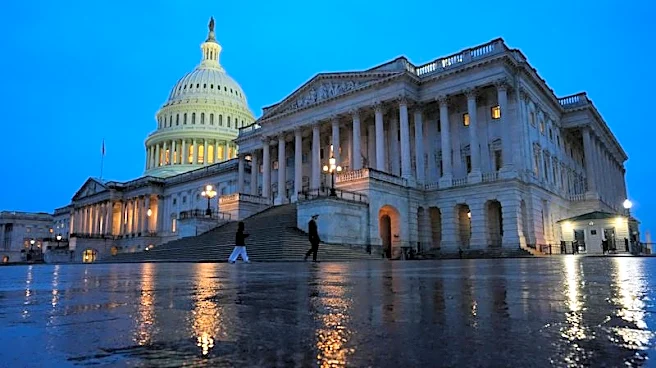
The U.S. Senate has unanimously passed a rule prohibiting senators from participating in prediction markets, such as Kalshi and Polymarket, due to concerns about potential insider trading. The resolution,
introduced by Senator Bernie Moreno of Ohio, aims to prevent senators from betting on events that could be influenced by government actions. This decision follows incidents where individuals have allegedly used confidential information to profit from these platforms. The rule change is intended to uphold ethical standards and prevent conflicts of interest, although enforcement relies on internal ethics measures and potential legal action if existing laws are violated.
Why It's Important?
This development highlights the ethical challenges and potential conflicts of interest that arise when public officials engage in activities that could be influenced by their positions. By banning participation in prediction markets, the Senate seeks to maintain public trust and ensure that government actions are not compromised by personal financial interests. The move reflects broader concerns about transparency and accountability in government, particularly in the context of financial markets and online platforms. It also underscores the need for clear regulations to prevent insider trading and protect the integrity of public office.
What's Next?
The Senate's decision may prompt further scrutiny of prediction markets and their regulation, potentially leading to broader legislative action. As the rule is enforced, senators will need to navigate the ethical landscape carefully to avoid conflicts of interest. The situation may also influence how other branches of government and public officials approach similar issues, potentially leading to more comprehensive policies governing the intersection of politics and financial markets. Ongoing monitoring and potential legal cases could shape the future of prediction markets and their role in the political sphere.